Alfred Adler’s theory of personality, also known as Individual Psychology, explains human behavior through a combination of personal goals, early experiences, relationships, feelings of inferiority, and the desire to belong. Unlike theories that focus mainly on unconscious drives, Adler emphasized that people are purposeful individuals who actively interpret their experiences and develop their own ways of responding to life.
Among the best-known Adlerian theories are his ideas about birth order, inferiority and compensation, striving for significance, lifestyle, social interest, and the importance of family relationships.
One of Adler’s most influential ideas was that people should be understood as whole individuals rather than as isolated symptoms or personality traits. His approach continues to influence counseling, psychotherapy, education, and the study of personality.
Table of Contents
Who Was Alfred Adler?
Alfred Adler was an Austrian physician and psychiatrist born in Vienna in 1870. He initially worked in medicine before developing a strong interest in psychology and human behavior.
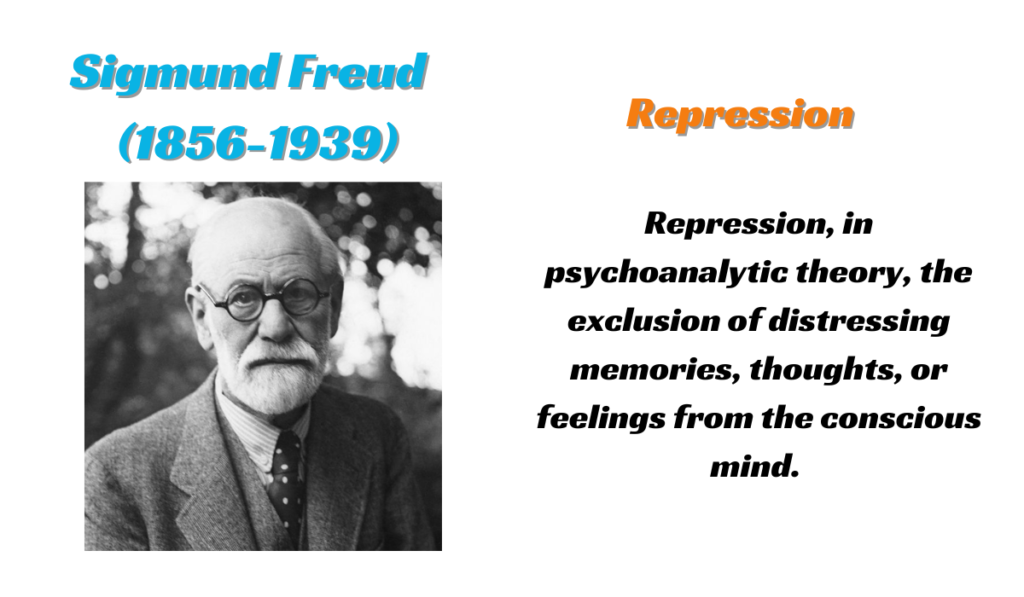
Adler was briefly associated with Sigmund Freud and the early psychoanalytic movement. However, he eventually developed a different approach. While Freud placed considerable emphasis on unconscious conflicts and instinctual drives, Adler became increasingly interested in social relationships, personal goals, feelings of inadequacy, and the individual’s place within the community.
Adler’s approach became known as Individual Psychology.
The name can be misleading because Adler was not arguing that people exist independently from society. In fact, social relationships were central to his thinking. He believed that understanding a person required looking at the whole individual and the social environment in which that person developed.
His work later influenced counseling and psychotherapy, particularly approaches that emphasize encouragement, personal responsibility, relationships, and purposeful behavior.
What Is Alfred Adler’s Theory of Personality?
At its simplest, Alfred Adler’s theory of personality proposes that people are shaped by how they interpret their experiences and by the goals they develop as they try to find competence, belonging, and significance.
Adler did not view personality as something completely fixed at birth. Instead, he believed people develop characteristic ways of thinking, feeling, and behaving through their interactions with family, society, and their environment.
This is sometimes described as a person’s style of life.
For example, two children may experience similar difficulties but interpret those experiences differently. One may become determined to improve, while another may become discouraged or avoid challenges.
For Adler, the important question was not simply:
“What happened to this person?”
It was also:
“What meaning did this person give to what happened, and how is that interpretation influencing their behavior now?”
This goal-oriented view is one of the features that distinguishes Adlerian psychology from several other classical theories of personality.
Several connected concepts form the foundation of Adlerian psychology.
1. Individual Psychology
Individual Psychology views the person as an integrated whole.
Adler believed that thoughts, emotions, physical experiences, relationships, beliefs, and behavior should not be examined as completely separate pieces. Instead, they work together within an individual’s overall way of living.
This holistic perspective means that psychologists and therapists should consider the person’s:
- Family relationships
- Childhood experiences
- Social environment
- Goals
- Beliefs
- Strengths and weaknesses
- Relationships
- Work and responsibilities
- Typical patterns of behavior
This approach remains useful when thinking about personality because people rarely behave the same way in every situation.
2. Feelings of Inferiority
One of Adler’s most famous concepts is inferiority.
Adler believed that feelings of inferiority are a normal part of being human. Children are naturally dependent on adults, physically smaller, and less capable in many areas. As they grow, they become aware of things they cannot yet do.
These experiences can create feelings of inadequacy.
However, Adler did not necessarily consider inferiority a psychological disorder.
A person may think:
- “I’m not good at this.”
- “I need to improve.”
- “Other people are better than me at this.”
- “I want to become more capable.”
These feelings can encourage learning and development.
Problems can arise when feelings of inadequacy become overwhelming and interfere with a person’s ability to deal with important life tasks. Adler distinguished ordinary feelings of inferiority from a more persistent inferiority complex.
Adler famously wrote:
“To be human means to feel inferior.”
The idea behind this statement is not that everyone is permanently inadequate. Rather, feelings of limitation are part of the human experience and can motivate people to develop their abilities.
3. Compensation and Overcompensation
Another important part of Adlerian theories is compensation.
If people become aware of a weakness or limitation, they may attempt to develop strengths in another area.
For example, a student who struggles academically might spend more time practicing and eventually become highly skilled in a particular subject.
This is an example of constructive compensation.
Adler believed that feelings of inferiority could motivate people to work toward improvement. Historical discussions of Adlerian theory often describe compensation as an attempt to move from a perceived position of inadequacy toward greater competence.
What Is Overcompensation?
Compensation can become unhealthy when the individual becomes excessively focused on proving their superiority.
For example, someone who feels insecure about their abilities might constantly need to demonstrate that they are better than everyone else.
In Adlerian terms, this can be understood as a form of overcompensation.
The important distinction is that healthy striving is not the same as dominating other people. Adler increasingly emphasized that personal development should be connected to social interest rather than selfish superiority.
4. Striving for Significance and Superiority
Adler believed people are naturally motivated to overcome limitations and move toward greater competence, significance, or fulfillment.
This is sometimes described as striving for superiority.
The word “superiority” can sound as though Adler believed everyone wants to dominate other people. That is not the best interpretation.
In a healthier form, striving means wanting to become more capable, solve problems, achieve meaningful goals, and make progress.
For example:
- A student works toward mastering a difficult subject.
- An athlete trains to improve performance.
- A person learns communication skills to build better relationships.
- A professional develops new skills to become more effective at work.
Adler’s later emphasis on social interest made an important distinction: healthy achievement should benefit both the individual and the wider community.
5. Adler’s Concept of Style of Life
One of the most useful ideas in Alfred Adler’s personality theory is the concept of style of life.
A person’s style of life refers to their characteristic way of interpreting experiences, pursuing goals, dealing with problems, and relating to other people.
It can include patterns such as:
- How a person handles failure
- How they respond to criticism
- Whether they avoid or approach challenges
- How they seek approval
- How they cooperate with others
- How they respond to competition
- What they believe about themselves and other people
Adler believed that early experiences contribute to the development of this style, but he did not treat people as completely powerless products of childhood.
People interpret their experiences and continue making choices.
This is why Adlerian psychology places considerable emphasis on encouragement and the possibility of change.
Alfred Adler Birth Order Theory
The Alfred Adler birth order theory is probably the most widely known part of his work.
Adler proposed that a child’s position within the family can influence their psychological experiences. The firstborn child, for example, may initially receive undivided parental attention. The arrival of a younger sibling can change that experience dramatically.
Adler therefore considered family constellation and sibling relationships relevant to personality development.
However, birth order should not be treated as a personality destiny.
Modern research does not support the idea that simply being a firstborn, middle child, youngest child, or only child automatically produces a particular personality. Family environment, parenting, socioeconomic conditions, culture, sibling relationships, and individual interpretation also matter.
So, the most accurate way to understand Adler’s birth-order theory is as a framework for considering the psychological experience of a child’s position within the family, rather than a personality prediction system.
Firstborn Children
In Adler’s framework, firstborn children initially experience a period in which they receive their parents’ full attention.
When another child arrives, that situation changes.
Adler described this as a kind of “dethronement.” The firstborn must adjust to sharing parental attention and may respond by becoming more responsible, protective, achievement-oriented, or concerned with maintaining their position.
But these are possibilities, not guaranteed characteristics.
A firstborn child who receives encouragement and learns cooperation may develop very differently from one who experiences excessive pressure or competition.
Middle Children
A middle child grows up between siblings and may experience a family environment in which competition and cooperation are both important.
Adler’s theory suggests that middle children may develop a strong awareness of other people’s positions and may become motivated to find their own place within the family.
However, again, there is no single “middle-child personality.”
The actual family environment matters.
Youngest Children
Youngest children may receive considerable attention from parents and older siblings.
Depending on the family environment, Adler associated the youngest position with possible advantages such as encouragement and social support, as well as possible challenges such as becoming overly dependent on others.
The outcome depends heavily on parenting and family relationships.
Only Children
Only children do not experience sibling competition inside the home in the same way as children with brothers or sisters.
Adler suggested that an only child may receive substantial attention from parents and spend significant time interacting with adults.
This may create both strengths and challenges depending on the child’s circumstances.
The important point is that birth order influences the social environment; it does not automatically determine personality.
Why Birth Order Does Not Tell the Whole Story
It is tempting to read a list of firstborn, middle-child, youngest-child, and only-child characteristics and assume that the theory can predict someone’s personality.
That would oversimplify Adler.
A child’s psychological position within the family is affected by many factors, including:
- Age differences between siblings
- Parenting style
- Family expectations
- Culture
- Family size
- Gender expectations
- Economic circumstances
- Sibling relationships
- Major family changes
- The child’s individual interpretation of events
Adler himself emphasized the individual’s subjective experience rather than treating family position as a simple biological formula.
This distinction is especially important when comparing Adler’s ideas with modern personality psychology.
If you want to explore measurable Psychology traits, contemporary trait models such as the Big Five provide a different framework for understanding personality.
Social Interest: The Heart of Adlerian Psychology
Social interest is one of the most important concepts in Adler’s mature theory.
Adler used the idea to describe a person’s sense of connection with other people and concern for the welfare of the wider community.
It is more than simply being outgoing or enjoying socializing.
A quiet person can have strong social interest, while a highly sociable person may not necessarily act with genuine concern for others.
Social interest can involve:
- Cooperation
- Empathy
- Responsibility
- Community participation
- Helping others
- Healthy relationships
- Contributing to society
Adler believed psychological health was closely connected with developing this sense of belonging and contribution.
Social Interest and Mental Health
From an Adlerian perspective, people can become overly focused on themselves when they feel deeply insecure, threatened, or disconnected.
Developing meaningful relationships and contributing to others can help counter this excessive self-focus.
This does not mean ignoring your own needs. Instead, Adlerian psychology attempts to balance personal development with cooperation and concern for others.
In this sense, psychological health involves asking not only:
“How can I become successful?”
but also:
“How can my abilities be useful to other people?”
The Role of Family in Alfred Adler Personality Theory
Family relationships are central to Alfred Adler personality theory because the family is one of the first social environments in which children learn about belonging, cooperation, competition, responsibility, and recognition.
Children observe:
- How parents respond to mistakes
- How siblings treat one another
- How conflict is handled
- Who receives attention
- What behavior is rewarded
- What expectations exist
- How family members communicate
These experiences can contribute to the child’s developing beliefs about themselves and other people.
Adlerian psychology therefore pays close attention to family relationships when trying to understand someone’s current behavior.
Adlerian Therapy
Adler’s ideas eventually became an important foundation for Adlerian psychotherapy.
Rather than simply asking what is wrong with a person, an Adlerian therapist may explore:
- What is the person’s current difficulty?
- What beliefs are influencing their behavior?
- What goals appear to guide their actions?
- What did they learn from early family experiences?
- Where do they feel discouraged or inadequate?
- How connected do they feel to other people?
- What changes could help them participate more effectively in life?
The Main Goals of Adlerian Therapy
Adlerian therapy commonly emphasizes:
- Building a therapeutic relationship
- Understanding the person’s lifestyle and patterns
- Exploring early experiences
- Identifying unhelpful beliefs and goals
- Providing encouragement
- Increasing social interest
- Developing more constructive ways of responding to life’s challenges
The goal is not simply to analyze childhood.
Instead, understanding the past can help people recognize patterns that are still influencing their present behavior.
Adlerian Theories and Modern Personality Psychology
Adler’s ideas remain historically important, but modern personality psychology does not treat all Adlerian claims as established scientific facts.
For example, the idea that birth order alone produces predictable personality traits has received mixed empirical support. Contemporary psychologists generally view personality as the result of multiple interacting influences, including genetics, environment, development, culture, relationships, and individual experiences.
Modern personality assessment often uses structured models such as the Big Five.
A Personality test can be useful as a starting point for learning about individual characteristics, although no test should be treated as a complete explanation of someone’s personality.
This distinction is important: Adler’s theory offers a valuable historical and conceptual perspective, while modern personality science uses different methods to measure individual differences.
Alfred Adler Quotes
Several Alfred Adler quotes are frequently associated with his ideas about inferiority, achievement, and human development.
One well-known statement is:
“To be human means to feel inferior.”
This captures Adler’s belief that feelings of inadequacy are not automatically signs of psychological illness. They can motivate people to develop skills and pursue meaningful goals.
Another Adlerian idea emphasizes the relationship between inferiority and striving. Adler wrote about psychological phenomena moving from feelings of inferiority toward higher goals and greater significance.
These ideas help explain why Adler did not simply view insecurity as something that must be eliminated. Instead, the important question was how a person responds to it.
Alfred Adler Theory vs. Freud’s Theory
Adler and Freud both made major contributions to early psychology, but their explanations of human behavior differed significantly.
| Alfred Adler | Sigmund Freud |
|---|---|
| Emphasized goals and purpose | Emphasized unconscious conflicts and drives |
| Focused strongly on social relationships | Focused strongly on intrapsychic conflict |
| Developed Individual Psychology | Developed psychoanalysis |
| Emphasized inferiority and compensation | Emphasized psychosexual development and unconscious processes |
| Highlighted social interest | Focused heavily on unconscious motivation |
| Viewed people in a holistic context | Developed a structural model of personality |
The comparison should not be reduced to “Adler was right and Freud was wrong.” Both were influential historical figures, and modern psychology has developed beyond many of their original claims.
Why Adlerian Theory Still Matters
The continuing appeal of Adlerian psychology comes partly from its practical view of human behavior.
People often want to understand questions such as:
- Why do I react strongly to criticism?
- Why do I compare myself with other people?
- Why do I avoid certain challenges?
- Why do I feel that I need to prove myself?
- How did my family experiences affect me?
- Why do I care so much about achievement?
- How can I build healthier relationships?
- What gives my life a sense of purpose?
Adlerian psychology offers one way of exploring these questions.
Its emphasis on encouragement, belonging, purpose, and the possibility of change also makes it particularly relevant to counseling and personal development.
Key Takeaways
- Alfred Adler’s personality theory is called Individual Psychology.
- Adler believed behavior is purposeful and directed toward goals.
- Feelings of inferiority are a normal part of human development and can motivate growth.
- Compensation describes efforts to overcome perceived weaknesses or limitations.
- Birth order may influence personality development, but it does not determine personality by itself.
- Social interest—the desire to cooperate, belong, and contribute to others—is central to healthy psychological development.
- Adler believed people develop a distinctive “style of life” based on their experiences, beliefs, goals, and choices.
- Adlerian therapy focuses on encouragement, belonging, self-understanding, and changing unhelpful patterns.
Frequently Asked Questions
What is Adlerian theory in simple terms?
Adlerian theory is a psychological approach developed by Alfred Adler. It suggests that people are purposeful individuals whose behavior is influenced by goals, relationships, early experiences, feelings of inferiority, and the desire to belong and contribute.
What is Alfred Adler’s theory of personality?
Alfred Adler’s personality theory, known as Individual Psychology, views personality as a unified whole shaped by experiences, interpretations, relationships, goals, and a person’s developing style of life.
What is Alfred Adler’s birth order theory?
The Alfred Adler birth order theory proposes that a child’s position within the family can influence their psychological experiences and developing style of life. However, birth order does not determine personality by itself.
What are the main Adlerian theories?
Important Adlerian concepts include Individual Psychology, inferiority feelings, compensation, striving for significance, lifestyle, birth order, family dynamics, social interest, and goal-directed behavior.
What is social interest according to Alfred Adler?
Social interest refers to a person’s sense of connection with other people and concern for the welfare of others and the wider community. Adler considered it an important part of healthy psychological development.
What is an inferiority complex according to Adler?
An inferiority complex refers to persistent and overwhelming feelings of inadequacy that interfere with a person’s ability to deal effectively with life’s challenges. Adler distinguished this from the normal feelings of inferiority experienced by everyone.
Does birth order determine personality?
No. Birth order should not be treated as a personality formula. Adler considered family position important, but modern personality development is understood as the result of many interacting biological, environmental, social, and psychological influences.
Is Adlerian psychology still used today?
Yes. Adler’s ideas continue to influence counseling and psychotherapy, particularly approaches emphasizing encouragement, relationships, purpose, belonging, and the individual’s ability to make constructive changes.
Final Thoughts
Alfred Adler’s theory of personality offers a different way of looking at human behavior. Instead of seeing people as passive products of childhood or biology, Adler emphasized purpose, interpretation, relationships, and the possibility of growth.
His ideas about inferiority, compensation, birth order, lifestyle, and social interest remain some of the most recognizable concepts in the history of personality psychology.
At the same time, Adlerian theories should be understood in their historical context. Birth order does not automatically determine personality, and modern psychology uses broader scientific evidence and personality models to understand individual differences.
Perhaps the most useful lesson from Adler is that understanding ourselves involves more than identifying our weaknesses. It also involves asking what we are trying to achieve, how our experiences have shaped our beliefs, how we relate to other people, and how we can use our strengths in meaningful ways.
References
- Adler, Alfred. The Science of Living. https://www.goodreads.com/en/book/show/2589114-the-science-of-living
- Adler, Alfred. Understanding Human Nature. https://www.goodreads.com/en/book/show/255263.Understanding_Human_Nature
- Adler, Alfred. The Practice and Theory of Individual Psychology. https://ia801504.us.archive.org/13/items/in.ernet.dli.2015.188513/2015.188513.Thr-Practice-And-Theory-Of-Individual-Psychology.pdf
- Ansbacher, Heinz L., and Rowena R. Ansbacher, eds. The Individual Psychology of Alfred Adler.
- Capuzzi, Dave, and Mark D. Stauffer. Counseling and Psychotherapy: Theories and Interventions.
- Miller, R., & Dillman Taylor, D. “Does Adlerian Theory Stand the Test of Time?”

Maria holds an MS in Psychology with a specialization in Social Psychology. She is a research-oriented writer with a strong academic background in psychological and behavioral sciences. Her work focuses on bridging academic research and public understanding by simplifying complex psychological theories and social dynamics. She writes about the relationship between society, mental health, and human behavior, making evidence-based ideas more accessible and practical for readers.