
Personality Psychology

Explore personality psychology and uncover the traits, types, and theories that shape individual differences and define our unique personalities.

what does high neuroticism mean

What Does High Neuroticism Mean? Signs, Traits, and Examples

High neuroticism means a person tends to experience negative emotions, such as worry, anxiety, sadness, frustration, or emotional discomfort, more frequently or intensely than someone with lower neuroticism. In psychology, neuroticism is one of the five major dimensions of personality in the Big Five personality model. People with high neuroticism may be more sensitive to

What Does High Neuroticism Mean? Signs, Traits, and Examples Read More »

Comparison of high and low agreeableness,

What Does Agreeableness Mean? Definition, Traits, and Examples

Agreeableness is a personality trait that describes how much a person tends to cooperate with others, show compassion, consider different perspectives, and maintain positive social relationships. In psychology, agreeableness is one of the five major personality dimensions in the Big Five personality model. People with high agreeableness are often considerate, trusting, helpful, and willing to

What Does Agreeableness Mean? Definition, Traits, and Examples Read More »
Conscientiousness Personality Trait

What Is Conscientiousness Personality Trait? Examples and Everyday Behavior

The conscientiousness personality trait describes how much a person tends to be organized, responsible, self-disciplined, and persistent in pursuing goals. It is one of the Big Five personality traits, and it exists on a spectrum: people can show more or less conscientiousness, and their behavior can vary with the situation. In everyday life, conscientiousness might

What Is Conscientiousness Personality Trait? Examples and Everyday Behavior Read More »

What Is Openness to Experience

What Is Openness to Experience? Traits, Examples, and Meaning

Openness to experience is a personality trait that reflects how receptive you are to new ideas, experiences, and ways of thinking. People high in openness tend to be curious, imaginative, and eager to explore the unfamiliar, while those lower in openness prefer familiar routines, practical approaches, and established traditions. As one of the Big Five

What Is Openness to Experience? Traits, Examples, and Meaning Read More »

Fundamental Attribution Error

What Is the Fundamental Attribution Error? Psychology Explained

The fundamental attribution error is the tendency to overemphasize someone’s personality and underestimate the situation when explaining their behavior. In practice, this means we often think, “They’re late because they’re irresponsible,” while ignoring that they might be stuck in traffic or dealing with an emergency. This bias shapes how we judge coworkers, strangers, even ourselves,

What Is the Fundamental Attribution Error? Psychology Explained Read More »

emotionally unavailable

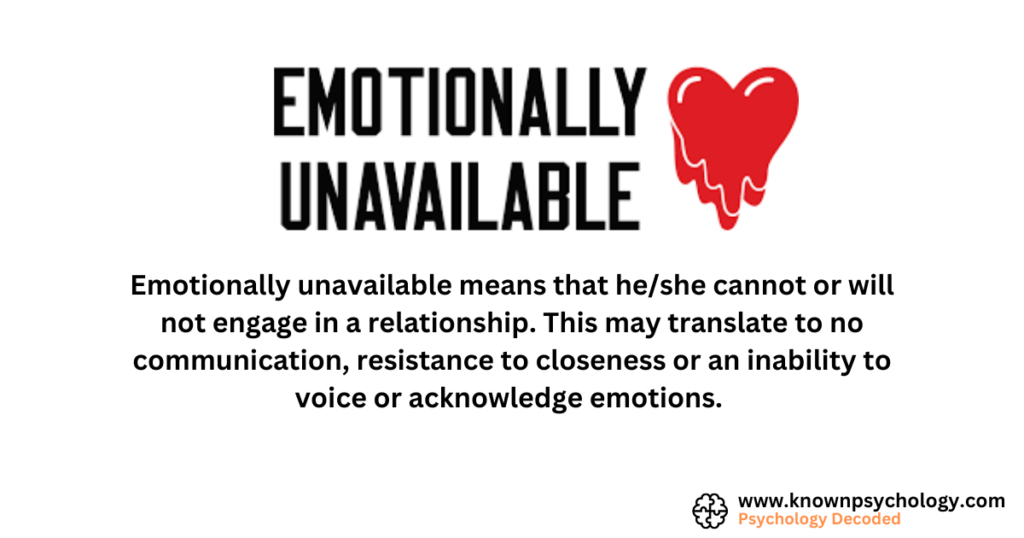
What Does Emotionally Unavailable Mean?

Emotional availability is foundational in a healthy relationship. It enables us to communicate openly, be empathic, and show support for each other. Being emotionally unavailable means that someone has a real impediment to a close, significant connection. So, what exactly is emotionally unavailable, and how does it differ relationship-wise? What is Emotional Unavailability? Being emotionally

What Does Emotionally Unavailable Mean? Read More »

The Transformative Power of Liminal Space: Embracing the Journey of Self-Discovery and Growth

The Transformative Power of Liminal Space: Embracing the Journey of Self-Discovery and Growth

In our journey of self-discovery and growth, there exists a transformative space called the liminal space. It is a threshold between the familiar and the unknown, where profound transformation occurs. This article delves into the power of the liminal space, exploring how it can propel us towards personal growth and self-actualization. In this liminal space,

The Transformative Power of Liminal Space: Embracing the Journey of Self-Discovery and Growth Read More »

5 Psychology Tricks to Boost Productivity

5 Psychology Tricks to Boost Productivity

Why Psychology Helps Boost Productivity Boosting productivity is not just about working longer hours. It’s about working smarter. Psychology gives us tools to understand how the mind works, and once you apply these insights, you can improve focus, reduce stress, and get more done in less time (Harvard Business Review, 2018). If you’ve ever wondered

5 Psychology Tricks to Boost Productivity Read More »

Scroll to Top