Comparison of high and low agreeableness,

What Does Agreeableness Mean? Definition, Traits, and Examples

Agreeableness is a personality trait that describes how much a person tends to cooperate with others, show compassion, consider different perspectives, and maintain positive social relationships. In psychology, agreeableness is one of the five major personality dimensions in the Big Five personality model. People with high agreeableness are often considerate, trusting, helpful, and willing to

What Does Agreeableness Mean? Definition, Traits, and Examples Read More »

Conscientiousness Personality Trait

What Is Conscientiousness Personality Trait? Examples and Everyday Behavior

The conscientiousness personality trait describes how much a person tends to be organized, responsible, self-disciplined, and persistent in pursuing goals. It is one of the Big Five personality traits, and it exists on a spectrum: people can show more or less conscientiousness, and their behavior can vary with the situation. In everyday life, conscientiousness might

What Is Conscientiousness Personality Trait? Examples and Everyday Behavior Read More »

The Psychology of Investing

The Psychology of Investing: Why Even Some of the Smartest People Get It Wrong

The psychology of investing explains how emotions and cognitive biases influence financial decisions, often causing investors to buy high and sell low despite knowing the basic rule of investing. Common biases include loss aversion, which makes losses feel more painful than equivalent gains feel rewarding, and anchoring, which causes investors to judge an asset’s value

The Psychology of Investing: Why Even Some of the Smartest People Get It Wrong Read More »

What Is Openness to Experience

What Is Openness to Experience? Traits, Examples, and Meaning

Openness to experience is a personality trait that reflects how receptive you are to new ideas, experiences, and ways of thinking. People high in openness tend to be curious, imaginative, and eager to explore the unfamiliar, while those lower in openness prefer familiar routines, practical approaches, and established traditions. As one of the Big Five

What Is Openness to Experience? Traits, Examples, and Meaning Read More »

Fundamental Attribution Error

What Is the Fundamental Attribution Error? Psychology Explained

The fundamental attribution error is the tendency to overemphasize someone’s personality and underestimate the situation when explaining their behavior. In practice, this means we often think, “They’re late because they’re irresponsible,” while ignoring that they might be stuck in traffic or dealing with an emergency. This bias shapes how we judge coworkers, strangers, even ourselves,

What Is the Fundamental Attribution Error? Psychology Explained Read More »

school counselors

Why School Counselors Occupy a Distinct Role Between Mental Health Support and Academic Guidance

For many students, school is more than a place to learn. It is also an environment where they develop socially, manage emotional challenges, and begin making decisions about their future. School counselors occupy a distinctive position within this environment, supporting students with both academic concerns and personal or emotional challenges. Unlike professionals who focus exclusively

Why School Counselors Occupy a Distinct Role Between Mental Health Support and Academic Guidance Read More »

Collaboration Between Social Workers

Why Collaboration Between Social Workers and Nurses Improves Patient Outcomes

Healthcare has become increasingly complex, with patients often managing chronic conditions, shorter hospital stays, and a range of social and environmental factors that can affect their health. As healthcare providers address these challenges, Collaboration between social workers and nurses has become increasingly important. Nurses provide ongoing clinical care and monitor patients’ immediate health needs, while social

Why Collaboration Between Social Workers and Nurses Improves Patient Outcomes Read More »

What Is Learned Helplessness

What Is Learned Helplessness? Causes, Signs, and Examples

Learned helplessness is a psychological state in which a person or animal stops trying to escape or change a bad situation because repeated experience has taught them that their actions don’t affect the outcome, even after the situation becomes changeable. It was first identified in 1967 by psychologists Martin Seligman and Steven Maier, and it

What Is Learned Helplessness? Causes, Signs, and Examples Read More »

Classical Conditioning in Psychology

Classical Conditioning in Psychology: Definition, Examples, and How It Works

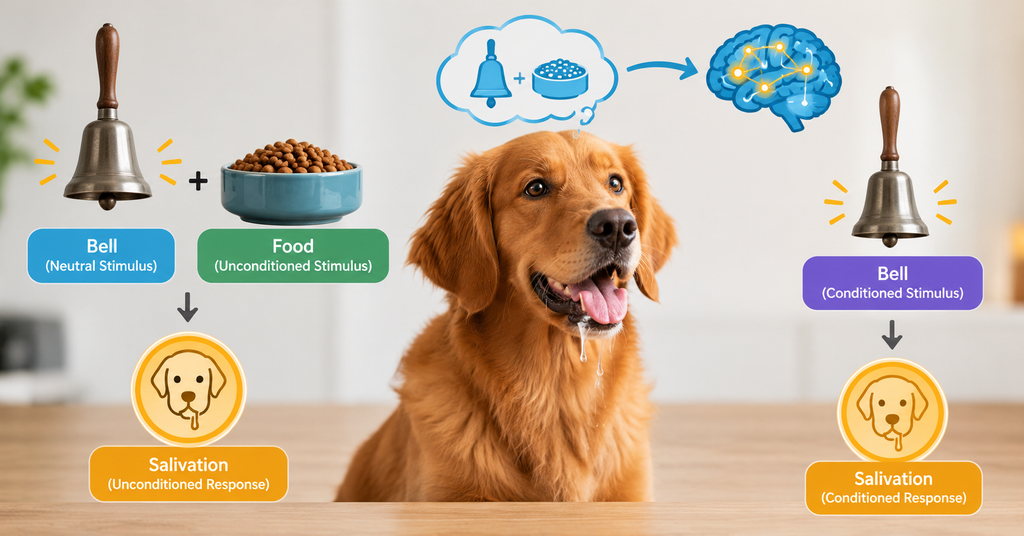
Classical conditioning is a fundamental learning process in which your brain automatically links two stimuli so that something once neutral (like a sound, smell, or situation) starts triggering a reflexive response. It happens without conscious effort, shaping everything from your food cravings to your anxiety in certain places. This article explains what classical conditioning is

Classical Conditioning in Psychology: Definition, Examples, and How It Works Read More »

Mere Exposure Effect

What Is the Mere Exposure Effect? How Familiarity Shapes Our Preferences

You didn’t choose your favorite song the first time you heard it. Chances are, it grew on you — the third, fifth, or tenth listen felt better than the first. That’s not a coincidence, and it’s not really about the song getting better. It’s one of the most well-documented biases in psychology: the mere exposure

What Is the Mere Exposure Effect? How Familiarity Shapes Our Preferences Read More »

Scroll to Top