Openness to experience is a personality trait that reflects how receptive you are to new ideas, experiences, and ways of thinking. People high in openness tend to be curious, imaginative, and eager to explore the unfamiliar, while those lower in openness prefer familiar routines, practical approaches, and established traditions. As one of the Big Five personality traits, openness to experience helps explain why some people actively seek novelty while others find comfort in consistency.

Table of Contents
What Is Openness to Experience? The Psychology Definition
In psychology, openness to experience (often shortened to just “openness”) is one of five core dimensions used to describe human personality in the Five-Factor Model, commonly known as the Big Five. The trait captures individual differences in how people mentally engage with the world, whether they gravitate toward abstract thinking, creativity, and variety, or prefer concrete, practical, and conventional approaches.
Openness to Experience: Psychology Definition
The openness to experience psychology definition centers on receptivity: it measures your tendency to seek out and appreciate novel experiences, ideas, emotions, and aesthetic stimuli. Psychologists Robert McCrae and Paul Costa, who developed the widely used NEO Personality Inventory, describe openness as reflecting “original, imaginative, broad interests, and daring” thinking patterns.
Unlike intelligence or education level, openness describes your style of processing information rather than your cognitive capacity. Two people with identical IQs might differ substantially in openness; one might love philosophical debates and experimental art, while the other prefers straightforward facts and familiar activities.
Is Openness to Experience a Big Five Trait?
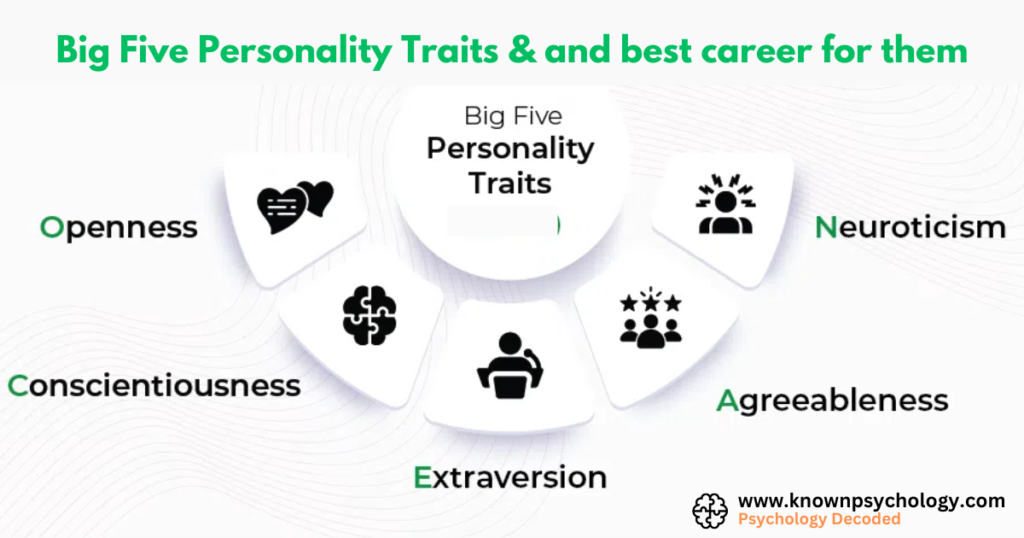
Yes. Openness to experience is a Big Five trait, alongside:
- Openness to experience
- Conscientiousness
- Extraversion
- Agreeableness
- Neuroticism
Together, these five dimensions (often remembered by the acronym OCEAN) provide a comprehensive framework for understanding personality differences. Research across cultures and languages has consistently validated openness as a distinct and measurable aspect of human personality.
The Six Facets of Openness to Experience
Openness isn’t a single, uniform trait. Instead, it consists of six distinct facets that capture different ways people express openness in daily life. Understanding these facets helps explain why someone might be highly creative but politically conservative, or intellectually curious but emotionally reserved.
| Facet | What It Means | High Scorers Tend To… | Low Scorers Tend To… |
| Imagination | Fantasy and creative thinking | Enjoy daydreaming, storytelling, and abstract ideas | Prefer facts, logic, and practical theories |
| Aesthetics | Appreciation for art and beauty | Feel moved by music, art, nature, and design | Focus less on artistic or sensory experiences |
| Emotionality | Awareness of inner feelings | Experience and express complex emotions deeply | Maintain emotional composure; less introspective |
| Adventurousness | Preference for variety and novelty | Try new foods, travel to unfamiliar places, embrace change | Stick to familiar routines and trusted choices |
| Intellect | Intellectual curiosity | Enjoy philosophical discussions and theoretical concepts | Focus on concrete, practical information |
| Liberalism | Openness to challenging authority | Question traditions and consider alternative viewpoints | Respect established rules and conventional norms |
Imagination: Thinking Beyond the Obvious
People high in imagination have active inner mental lives. They enjoy creative problem-solving, entertain “what if” scenarios, and may frequently daydream or engage in fantasy. This facet is particularly important in creative professions, where generating original ideas is essential.
Example: When faced with a work challenge, a high-imagination person might brainstorm unconventional solutions others haven’t considered, while a low-imagination person would prefer proven methods with predictable outcomes.
Aesthetics: Sensitivity to Beauty
The aesthetics facet reflects emotional responsiveness to art, music, nature, and design. High scorers notice and appreciate sensory details a beautifully composed photograph, the emotional depth of a symphony, or the elegance of a well-designed building.
Example: Someone high in aesthetics might plan a vacation around visiting art museums or attending concerts, while someone lower in this facet would prioritize practical considerations like cost and convenience.
Emotionality: Depth of Feeling
Emotionality (sometimes called “feelings”) describes your willingness to experience and express complex emotions. People high in this facet are attuned to their emotional states, value emotional depth, and may be more introspective about their inner experiences.
Example: After a significant life event, a high-emotionality person might spend time journaling or discussing their feelings, while a low-emotionality person would focus on practical next steps.
Adventurousness: Embracing Novelty
Adventurousness captures your preference for variety versus routine. High scorers actively seek new experiences, trying exotic cuisines, traveling to unfamiliar destinations, or experimenting with different hobbies. They’re comfortable with uncertainty and may even find it exciting.
Example: On a typical weekend, a highly adventurous person might try rock climbing for the first time, while someone lower in adventurousness would enjoy their regular coffee shop and favorite walking route.
Intellect: Curiosity About Ideas
The intellect facet (also called “ideas”) reflects interest in abstract thinking, theoretical discussions, and intellectual exploration. High scorers enjoy debating philosophical questions, learning about complex topics, and engaging with challenging concepts—even when there’s no practical application.
Example: A person high in intellect might spend an evening reading about quantum physics or political theory for pleasure, while someone lower would prefer straightforward news or practical how-to content.
Liberalism: Questioning Conventions
Liberalism (or “values”) refers to openness to challenging authority, traditions, and established norms. High scorers are comfortable considering alternative moral, political, or social viewpoints and may actively question whether conventional rules still serve their purpose.
Example: In a team meeting, a high-openness person might propose radically rethinking a long-standing process, while someone lower would prefer refining existing procedures.
High Openness to Experience: Traits and Examples
People high in openness to experience share several characteristic patterns of thinking, feeling, and behaving. They tend to be intellectually curious, creatively oriented, and comfortable with ambiguity and change.
How Can I Tell If I Am High in Openness?
You’re likely high in openness if you:
- Read widely across genres, including philosophy, science fiction, poetry, or academic topics outside your expertise
- Seek cultural experiences like art exhibitions, foreign films, live music, or theater performances
- Enjoy exploring unfamiliar places, trying new cuisines, or learning new skills purely for fun
- Engage in abstract conversations about theoretical, philosophical, or speculative topics
- Express yourself creatively through writing, art, music, design, or other creative outlets
- Question conventional beliefs and feel comfortable entertaining viewpoints that challenge mainstream thinking
- Get bored easily with routine tasks or highly structured environments
- Notice aesthetic details in your environment: architecture, design, natural beauty, or artistic elements
Real-world example: Sarah, a marketing professional high in openness, spends her weekends attending poetry readings, experimenting with new recipes from different cultures, and taking online courses in topics ranging from astrophysics to art history. At work, she’s known for proposing creative campaign ideas that initially seem unconventional but often prove highly effective.
Benefits of High Openness
Research has identified several advantages associated with high openness:
- Greater creativity and innovation – High openness is the strongest Big Five predictor of creative thinking and artistic achievement, linked to both divergent thinking (generating novel ideas) and real-world creative output
- Flexibility in thinking – People high in openness adapt more easily to change and uncertainty, as they’re open to new perspectives and alternative approaches
- Enhanced appreciation for culture – This trait deepens enjoyment and understanding of music, literature, visual art, and diverse cultural experiences
- Lifelong learning – High openness predicts pursuit of higher education and engagement in lifelong learning, even after controlling for intelligence
- Tolerance and open-mindedness – Individuals high in openness are more likely to consider unfamiliar viewpoints and accept differences in others
- Better problem-solving in complex situations – The ability to make novel connections between remotely related ideas helps in tackling difficult, multi-faceted problems
Potential Drawbacks of High Openness
While high openness brings many strengths, it can also create challenges:
- Difficulty with routine – Highly open individuals may become restless or bored in repetitive tasks or highly structured environments
- Overthinking or indecisiveness – Exploring many ideas and perspectives can make it harder to make firm decisions or follow through consistently
- Less practicality – A focus on abstract or theoretical thinking may lead to neglecting practical concerns or everyday details
- Emotional sensitivity – Emotional openness may increase vulnerability to mood fluctuations, especially when combined with high neuroticism
- Social friction – Unconventional views or behaviors may not align well with traditional expectations or group norms, potentially creating tension
Low Openness to Experience: Traits and Examples
People lower in openness to experience (sometimes described as “closed to experience”) have their own distinct strengths and preferences. They tend to value familiarity, practicality, and established methods.
How Can I Tell If I Am Low in Openness?
You’re likely lower in openness if you:
- Prefer routines and established practices over experimenting with new approaches
- Enjoy familiar activities like watching favorite TV shows, cooking go-to recipes, or visiting the same vacation spots
- Focus on facts and practical concerns rather than abstract theories or speculative ideas
- Appreciate tradition, rules, and cultural or family values
- Choose structured hobbies or work that require consistency, technical precision, or clear procedures
- Approach change cautiously, preferring to think through potential risks before embracing something new
- Find comfort in predictability and feel stressed when plans change unexpectedly
- Prioritize usefulness over novelty when making decisions
Real-world example: Marcus, an accountant lower in openness, has a well-established morning routine he follows every day. He enjoys rewatching favorite movies, cooking family recipes passed down through generations, and taking annual trips to the same beach town. At work, colleagues rely on him for his consistency, attention to detail, and ability to maintain established systems efficiently.
Benefits of Low Openness
Being lower in openness is not a disadvantage it comes with valuable strengths:
- Consistency and reliability – Preference for routines leads to steady, dependable performance in structured environments
- Practical thinking – Focus on concrete facts and proven approaches enables efficient real-world problem-solving
- Respect for tradition and stability – This trait supports order and continuity, particularly valuable in roles requiring adherence to established systems
- Reduced risk-taking – A cautious approach helps avoid unnecessary risks and maintain security
- Clarity and decisiveness – Lower openness is linked to focused thinking and the ability to make decisions without becoming distracted by too many alternatives
Potential Drawbacks of Low Openness
Challenges associated with lower openness include:
- Resistance to change – Strong preference for familiarity may create difficulty adapting to new situations or necessary innovations
- Limited perspective – Reduced willingness to consider alternative viewpoints can affect learning, empathy, and creative problem-solving
- Less creativity – May struggle with idea generation or imaginative thinking, especially in unstructured or creative roles
- Rigidity – Strong attachment to tradition or routine can result in inflexible behavior and discomfort with ambiguity
- Narrower interests – Less curiosity and exploration may lead to fewer new experiences or missed opportunities for growth
Openness to Experience in Daily Life
Understanding your openness level can help you make better choices about careers, relationships, hobbies, and personal growth. Here’s how this trait shows up in different life domains.
Career and Work Preferences
High openness individuals thrive in roles that value creativity, innovation, and intellectual exploration:
- Creative professions (artist, writer, designer, musician)
- Research and academia
- Entrepreneurship and startups
- Consulting and strategy roles
- Technology and innovation-focused positions
They may struggle in highly routine, repetitive, or strictly hierarchical environments.
Lower openness individuals excel in roles requiring consistency, precision, and adherence to established procedures:
- Accounting and finance
- Administrative and operational roles
- Quality control and compliance
- Traditional crafts and skilled trades
- Roles with clear protocols and predictable workflows
They may find constant change, ambiguity, or unstructured creative work stressful.
Read more: The Big Five Personality Traits and Careers: Which Job Fits You?
Relationships and Social Life
Openness affects relationship dynamics and social preferences:
- High-openness people often enjoy diverse social circles, cultural activities, and deep conversations about ideas
- They may be more accepting of unconventional relationship arrangements or lifestyle choices
- Lower-openness individuals often prefer smaller, stable social networks and familiar social activities
- They may value tradition and shared cultural or family values in relationships
Research shows that wives’ openness (but not husbands’) is related to sexual satisfaction in marriage, possibly because open wives are more willing to explore variety in intimate experiences.
Following guide can be helpful if you are struggling with your relationship: Simple Communication Exercises to Strengthen Your Relationship
Political and Social Attitudes
Openness is the strongest personality predictor of political orientation among the Big Five traits:
- High openness correlates with political liberalism, support for cultural diversity, and acceptance of social change
- Lower openness correlates with political conservatism, preference for stability, and traditional values
- People high in openness show lower levels of prejudice, ethnocentrism, and right-wing authoritarianism
However, this relationship is complex, high openness doesn’t guarantee tolerance of all viewpoints, particularly those that directly conflict with one’s own worldview.
What Research Says About Openness to Experience
Decades of psychological research have revealed fascinating connections between openness and various life outcomes.
Openness and Intelligence
There’s a moderate positive correlation between openness and intelligence, particularly:
- Crystallized intelligence (accumulated knowledge) – correlation around r = 0.30 to 0.45
- Verbal ability – openness shows stronger associations with verbal knowledge than other cognitive domains
- Need for cognition – high-openness individuals enjoy thinking about ideas and solving intellectual puzzles
Importantly, openness and intelligence are separate dimensions: you can be highly intelligent but low in openness (preferring to apply intelligence to practical problems), or high in openness but average in intelligence (enjoying abstract thinking without exceptional cognitive ability).
Openness and Creativity
Openness is the strongest Big Five predictor of creative achievement:
- Professional artists, musicians, and scientists score significantly higher in openness than the general population
- The trait correlates with both divergent thinking (generating multiple novel solutions) and real-world creative output
- Creative individuals across domains share openness characteristics: curiosity, aesthetic sensitivity, and comfort with ambiguity
Openness and Age
Openness generally declines with age, particularly after mid-adulthood:
- Younger adults tend to be more exploratory and open to novel experiences
- Older adults often prioritize stability and routine, leading to lower openness scores over time
- However, intellectual engagement and creativity can be preserved or even grow older with the right lifestyle and environment
One study found that openness normally decreases by about one T-score point per decade with aging.
Openness and Mental Health
Research shows openness is largely unrelated to mental disorders:
- Meta-analyses have found that none of the major diagnostic groups differ from healthy controls on openness
- Openness has modest positive relationships with happiness and positive affect, but weaker associations than other Big Five traits
- In older adults, openness correlates with life satisfaction after controlling for confounding factors
The Neuroscience of Openness
Emerging neuroscience research suggests that people high in openness have more interconnection between disparate brain regions, which may explain their tendency to see connections others miss. Higher openness has been linked to activity in the dorsolateral prefrontal cortex and the ascending dopaminergic system.
Can Openness Change?
While personality traits are relatively stable, openness can shift under certain circumstances:
- A landmark study found that psilocybin (a psychedelic compound) produced significant increases in openness that persisted for 14 months, particularly among participants who had mystical experiences during the session
- Life experiences that challenge your worldview, such as extensive travel, higher education, or exposure to diverse cultures, may gradually increase openness
- Intentional practices like adding variety to routines, exploring new ideas, or engaging with art and culture can help cultivate greater openness
Key Takeaways
Understanding openness to experience helps explain fundamental differences in how people approach life:
- Openness exists on a spectrum – Most people fall somewhere in the middle, with relatively few scoring extremely high or low
- Both high and low openness have advantages – Neither is inherently better; each suits different environments and goals
- Openness has six facets – You might be high in some (like intellect) but lower in others (like aesthetics)
- Context matters – High openness benefits creative, changing environments; lower openness excels in stable, structured settings
- Self-awareness enables better choices – Knowing your openness level helps you choose careers, relationships, and lifestyles that fit your natural tendencies
Frequently Asked Questions
What is the openness to experience?
Openness to experience is a personality trait that measures how receptive you are to new ideas, experiences, and ways of thinking. People high in openness are curious, imaginative, and eager to explore the unfamiliar, while those lower in openness prefer familiar routines, practical approaches, and established traditions. It is one of the five core dimensions in the Big Five personality model.
What is the openness personality trait?
The openness personality trait (also called openness to experience) describes individual differences in how people mentally engage with novelty, complexity, and abstract thinking. It encompasses facets like imagination, aesthetic appreciation, intellectual curiosity, emotional awareness, adventurousness, and willingness to challenge conventions. Unlike intelligence, openness reflects your style of thinking rather than cognitive ability.
How can I tell if I am high in openness?
You’re likely high in openness if you actively seek new experiences, enjoy abstract or philosophical thinking, appreciate art and beauty, feel comfortable with ambiguity, question traditional assumptions, and get bored with routine. Common signs include reading widely across genres, trying new foods and activities, engaging in creative pursuits, and enjoying conversations about theoretical topics.
Is openness to experience a Big Five trait?
Yes, openness to experience is a Big Five trait. It is one of five core personality dimensions in the Five-Factor Model (Big Five), alongside conscientiousness, extraversion, agreeableness, and neuroticism. These five traits provide a comprehensive, scientifically validated framework for understanding personality differences across cultures and languages.

Maria holds an MS in Psychology with a specialization in Social Psychology. She is a research-oriented writer with a strong academic background in psychological and behavioral sciences. Her work focuses on bridging academic research and public understanding by simplifying complex psychological theories and social dynamics. She writes about the relationship between society, mental health, and human behavior, making evidence-based ideas more accessible and practical for readers.