Why Do I Feel Emotionally Numb?
Have you ever asked yourself, “Why do I feel emotionally numb?” Maybe you no longer feel excited, happy, sad, or even connected to the people around you. Life may feel dull, empty, or emotionally distant. Many people go through this experience, especially during stressful periods of life.
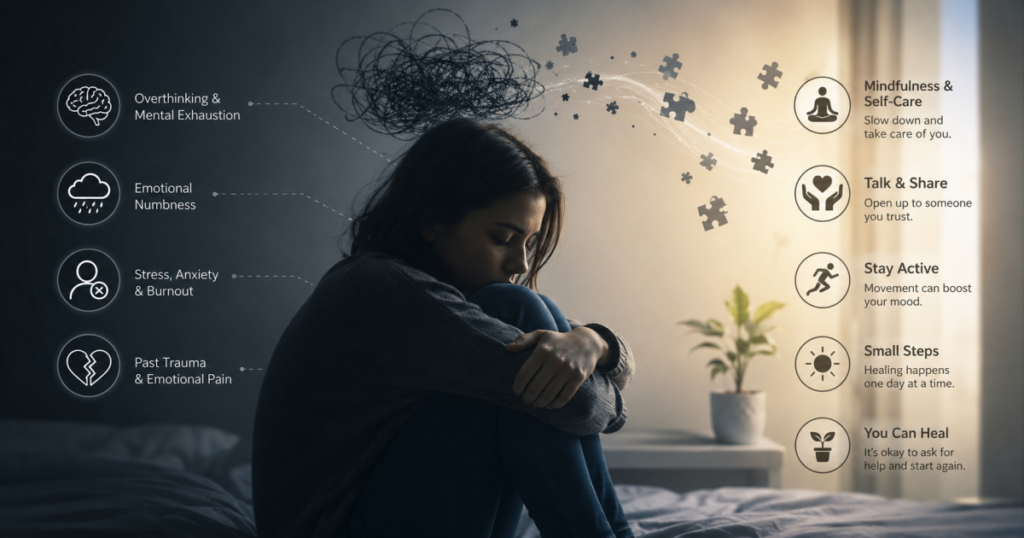
Emotional numbness is more common than many people realize. It can happen because of emotional burnout, mental exhaustion, trauma, anxiety, depression, or long-term stress. Sometimes, the mind shuts down emotions as a way to protect itself from emotional pain. Click here to read more about it.
Feeling emotionally empty does not mean you are weak or broken. It usually means your mind and body are overwhelmed and trying to cope with too much pressure at once.
In this article, you will learn what emotional numbness is, the common symptoms, the emotional numbness causes, and practical ways to reconnect with your emotions again.
What Is Emotional Numbness?
Emotional numbness is a condition where a person feels disconnected from their emotions. Instead of feeling happiness, sadness, anger, or excitement normally, emotions may feel muted or completely absent.
Some people describe emotional detachment as:
- Feeling emotionally “blank”
- Feeling disconnected from reality
- Not caring about things anymore
- Feeling emotionally empty inside
- Being unable to cry or express emotions
Emotional numbness is not always a mental illness itself. Often, it is a trauma response or a reaction to stress overload, anxiety symptoms, emotional suppression, or emotional burnout.
Your brain sometimes blocks emotions temporarily to protect you from emotional pain or mental exhaustion. While this defense mechanism may help in the short term, long-term emotional numbness can affect relationships, work, and overall mental health.
Common Symptoms of Emotional Numbness
People experience emotional numbness differently. Some symptoms may be mild, while others can strongly affect daily life.
Here are some common signs:
- Feeling emotionally detached from others
- Losing interest in activities you once enjoyed
- Feeling disconnected from yourself
- Difficulty expressing emotions
- Feeling empty or emotionally flat
- Lack of motivation or excitement
- Avoiding social situations
- Trouble feeling empathy
- Feeling mentally exhausted all the time
- Difficulty crying even during painful situations
Sometimes emotional numbness also appears with physical symptoms such as:
- Fatigue
- Brain fog
- Sleep problems
- Low energy
- Difficulty concentrating
If these symptoms continue for a long time, they may be connected to deeper mental health issues such as anxiety, depression, PTSD, or chronic emotional burnout.
Reasons You Feel Emotionally Numb
There are many emotional numbness causes, and understanding them can help you start healing.
Stress and Burnout
One of the biggest reasons people feel emotionally numb is long-term stress and burnout.
Modern life can be mentally exhausting. Work pressure, financial stress, family responsibilities, social pressure, and constant worrying can overload the brain. When stress becomes too intense for too long, the mind may enter a shutdown mode.
This is often called emotional burnout.
Burnout symptoms may include:
- Constant fatigue
- Irritability
- Lack of motivation
- Emotional detachment
- Feeling emotionally drained
- Difficulty enjoying life
When your nervous system stays stressed for weeks or months, your brain may reduce emotional responses to protect your mental energy. This is why many people under stress say things like:
- “I don’t feel anything anymore.”
- “I’m emotionally tired.”
- “I feel disconnected from life.”
Stress overload can slowly make emotions feel distant and harder to access.
Signs Your Numbness May Be Related to Burnout
- You feel tired even after resting
- Small tasks feel overwhelming
- You avoid people or responsibilities
- You feel emotionally disconnected at work or home
- You no longer enjoy things you used to love
Burnout-related emotional numbness is very common in students, parents, healthcare workers, caregivers, and people with high-pressure jobs.
Anxiety and Depression
Anxiety and depression are also major causes of emotional numbness.
Many people think anxiety only causes panic or worry, but anxiety symptoms can also include emotional shutdown. When the brain stays in “survival mode” for too long, emotional suppression may happen automatically.
Depression can also make people feel emotionally empty. Instead of sadness, some people experience:
- Emotional flatness
- Lack of pleasure
- Disconnection
- Feeling numb inside
This is sometimes called “anhedonia,” which means losing the ability to enjoy life.
How Anxiety Can Cause Emotional Numbness
When anxiety becomes chronic, the nervous system stays constantly alert. Over time, the brain becomes exhausted. To cope with this mental exhaustion, emotional responses may become weaker.
People with anxiety-related numbness may:
- Feel disconnected during stressful situations
- Avoid emotional conversations
- Feel detached from reality
- Experience brain fog and emotional emptiness
Depression and Emotional Detachment
Depression often affects emotional processing. A person may stop reacting emotionally to events that once mattered deeply.
They may say:
- “I don’t feel happy or sad.”
- “Everything feels pointless.”
- “I feel emotionally dead inside.”
This emotional detachment can make relationships and daily activities difficult.
Childhood Trauma
Childhood trauma is another important reason why people feel emotionally numb.
Traumatic experiences during childhood can affect emotional development for many years. Emotional neglect, abuse, bullying, family conflict, or growing up in an unsafe environment can teach the brain to suppress emotions for survival.
In many cases, emotional numbness becomes a trauma response.
Children who grow up in stressful environments may learn:
- To hide emotions
- Avoid vulnerability
- To disconnect emotionally for protection
As adults, this emotional suppression can continue automatically.
Signs Trauma May Be Connected to Emotional Numbness
- Difficulty trusting people
- Fear of emotional closeness
- Feeling disconnected from memories
- Trouble expressing emotions
- Emotional shutdown during stress
- Feeling unsafe when vulnerable
Trauma-related emotional numbness is common in people with PTSD or unresolved emotional pain.
The brain is often trying to protect itself from painful memories or overwhelming emotions.
How to Feel Emotions Again
If you are wondering how to stop feeling emotionally numb, the good news is that healing is possible.
Recovering from emotional numbness takes time, patience, and self-care. The goal is not to force emotions but to slowly reconnect with yourself in a healthy way.
Here are some helpful strategies:
1. Acknowledge Your Feelings
The first step is accepting that emotional numbness exists. Ignoring it or criticizing yourself usually makes it worse.
Instead of saying:
Try saying:
- “My mind may be overwhelmed right now.”
Self-compassion is important during recovery.
2. Reduce Stress Levels
Since stress overload is a major cause of emotional burnout, reducing stress can help emotions return gradually.
Helpful habits include:
- Getting enough sleep
- Taking breaks from work
- Limiting social media
- Spending time outdoors
- Practicing deep breathing
- Creating a healthy daily routine
Even small lifestyle changes can help calm the nervous system.
3. Talk to Someone You Trust
Emotional numbness often grows stronger in isolation.
Talking to a trusted friend, family member, or therapist can help you reconnect emotionally. You do not need to explain everything perfectly. Simply expressing your thoughts may help release emotional pressure.
Therapy can be especially helpful if trauma, anxiety, or depression are involved.
4. Reconnect With Your Body
Emotions are closely connected to the body. Physical movement can help reduce mental exhaustion and improve emotional awareness.
Helpful activities include:
- Walking
- Stretching
- Yoga
- Exercise
- Meditation
- Deep breathing exercises
Mindfulness techniques can also help you become more aware of emotions without judgment.
5. Allow Yourself to Feel Slowly
Sometimes people try to force emotions to come back quickly, but healing usually happens gradually.
Start by noticing small emotional experiences:
- Music that affects you
- Movies that trigger emotions
- Moments of peace or comfort
- Conversations that make you feel connected
Over time, emotional sensitivity often returns naturally.
6. Seek Professional Help if Needed
If emotional numbness lasts for a long time or affects your daily life, speaking with a mental health professional can help.
A therapist can help identify:
- Emotional numbness causes
- Trauma responses
- Anxiety symptoms
- Depression symptoms
- Emotional suppression patterns
Professional support can provide tools for emotional healing and recovery.
Final Thoughts
If you keep asking yourself, “Why do I feel emotionally numb?” you are not alone. Emotional numbness is often the mind’s response to stress, trauma, anxiety, depression, or emotional burnout.
Feeling emotionally empty does not mean you have lost your emotions forever. In many cases, your brain is simply trying to protect itself from overwhelming emotional pain or mental exhaustion.
Healing takes time, but emotions can return with proper support, self-care, stress management, and emotional connection.
The most important thing is to be patient with yourself. Small steps toward emotional awareness can slowly help you feel connected again.
FAQs
Is emotional numbness normal?
Yes, emotional numbness can happen during periods of stress, trauma, anxiety, or emotional burnout. Temporary emotional numbness is common, but if it lasts a long time, it may help to seek professional support.
Can anxiety cause emotional numbness?
Yes, chronic anxiety can cause emotional numbness. When the brain stays in survival mode for too long, emotional shutdown may happen as a coping mechanism.
How do I stop feeling emotionally numb?
You can begin by reducing stress, improving sleep, talking to supportive people, practicing mindfulness, and seeking therapy if needed. Healing usually happens gradually over time.
Is emotional numbness a sign of depression?
It can be. Some people with depression feel emotionally empty or emotionally detached instead of feeling sadness. Emotional numbness may also be connected to trauma, stress, or anxiety disorders.

Maria holds an MS in Psychology with a specialization in Social Psychology. She is a research-oriented writer with a strong academic background in psychological and behavioral sciences. Her work focuses on bridging academic research and public understanding by simplifying complex psychological theories and social dynamics. She writes about the relationship between society, mental health, and human behavior, making evidence-based ideas more accessible and practical for readers.