High neuroticism means a person tends to experience negative emotions, such as worry, anxiety, sadness, frustration, or emotional discomfort, more frequently or intensely than someone with lower neuroticism. In psychology, neuroticism is one of the five major dimensions of personality in the Big Five personality model.
People with high neuroticism may be more sensitive to stress, worry about uncertain situations, take longer to recover from upsetting experiences, or become overwhelmed by everyday challenges. However, high neuroticism does not mean someone is weak, unhappy all the time, or mentally ill. It describes a general personality tendency, not a diagnosis.
Understanding what high neuroticism means can help you recognize emotional patterns, understand your reactions to stress, and identify practical ways to support your emotional well-being.
What Does High Neuroticism Mean in Psychology?
In personality psychology, neuroticism describes individual differences in emotional stability and the tendency to experience negative emotions. People with higher neuroticism generally react more strongly to perceived threats, frustration, uncertainty, or disappointment.
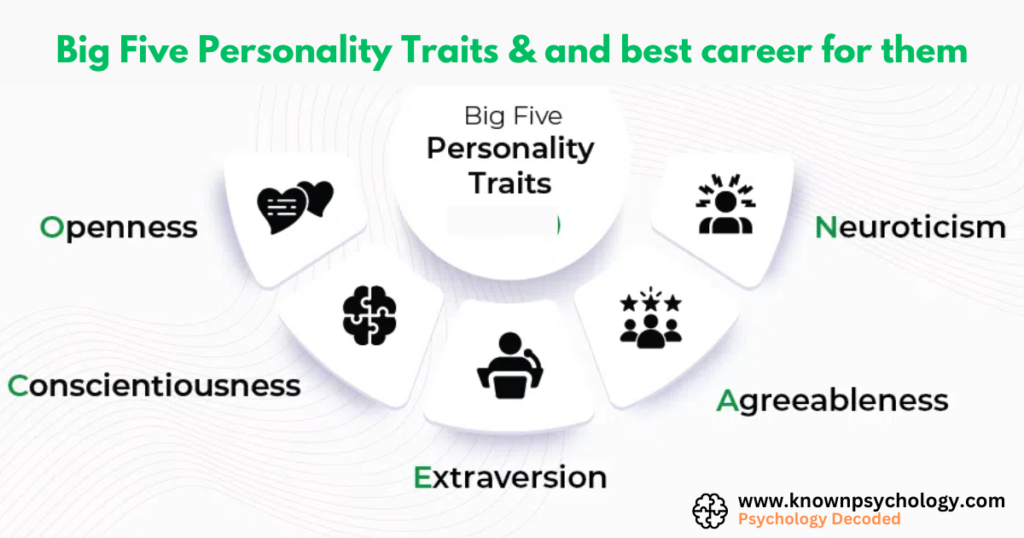
Neuroticism is one of the five dimensions in the Big Five personality model, sometimes remembered through the acronym OCEAN:
- Openness to experience: Curiosity, imagination, and interest in new ideas.
- Conscientiousness: Organization, responsibility, and self-discipline.
- Extraversion: Sociability, assertiveness, and engagement with other people.
- Agreeableness: Cooperation, compassion, and consideration for others.
- Neuroticism: A tendency to experience negative emotions and emotional distress.
These traits exist along continua rather than dividing people into rigid personality categories. Someone can score high in neuroticism and also be highly conscientious, agreeable, or outgoing.
High neuroticism is generally associated with greater emotional reactivity. For example, two people might receive the same unexpected criticism at work. One may feel disappointed but move on relatively quickly, while the other may continue worrying about the criticism long after the conversation has ended.
Neither reaction tells the whole story about a person’s personality. Context, experience, current stress, and coping skills also influence emotional responses.
To explore the five personality dimensions together, try our Big Five Personality Test.
What Are the Signs of High Neuroticism?
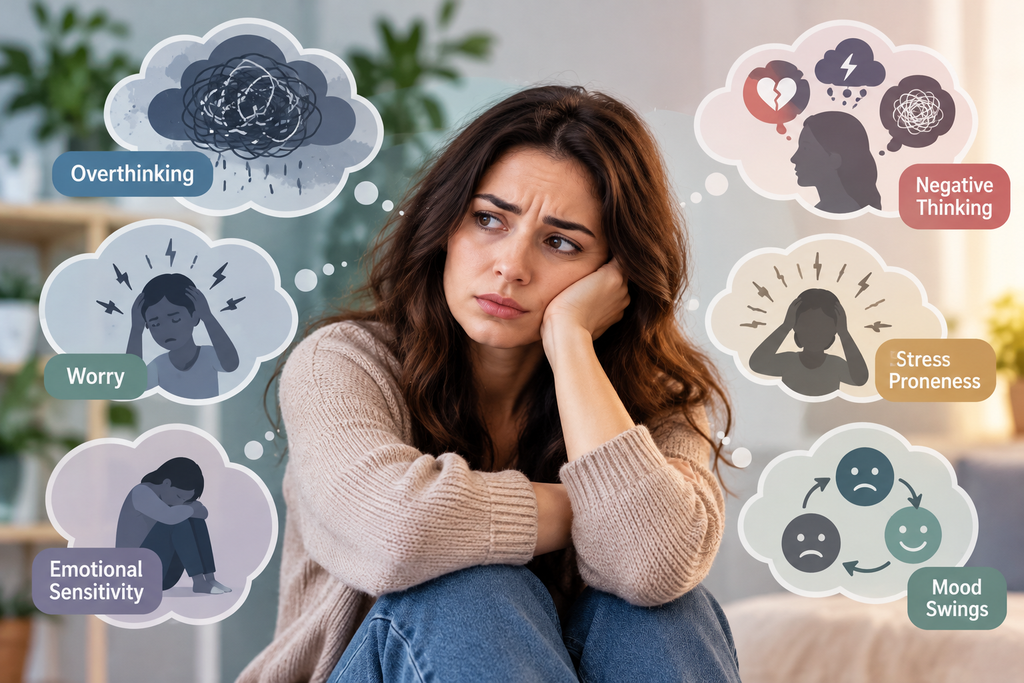
High neuroticism can appear in different ways. A person might experience several of the following tendencies without displaying every characteristic.
1. Frequent Worrying
People with high neuroticism may spend considerable time thinking about possible problems, mistakes, or negative outcomes.
For example, someone who has sent an important email might repeatedly wonder whether they made a mistake, offended the recipient, or damaged their professional reputation—even when there is little evidence that anything went wrong.
Occasional worry is normal. The relevant pattern is how often it occurs, how intense it becomes, and how difficult it is to move on from it.
2. Strong Emotional Reactions
A person with high neuroticism may experience stronger emotional reactions to criticism, disappointment, conflict, or unexpected changes.
A relatively small setback might produce considerable frustration or sadness. The person may also need more time to feel emotionally settled afterward.
This does not mean they deliberately overreact. Their emotional responses may arise quickly, before they have had time to evaluate the situation.
3. Sensitivity to Criticism
Criticism can feel particularly personal to someone with high neuroticism. They may interpret feedback as evidence that they are inadequate or that others have a negative opinion of them.
For example, a manager might suggest improving one section of a report. Instead of viewing the comment as specific feedback, the employee may begin questioning their overall competence.
Learning to separate constructive feedback from judgments about personal worth can help make these situations easier to manage.
4. Overthinking and Replaying Past Events
Another common pattern is repeatedly reviewing conversations, decisions, or mistakes.
A person might replay what they said during a meeting, imagine how others interpreted their words, or wonder what they should have done differently.
This pattern can overlap with rumination, which involves repeatedly thinking about distressing experiences without necessarily finding a solution.
5. Difficulty Managing Uncertainty
People with high neuroticism may find uncertain situations especially uncomfortable. They might seek reassurance, imagine worst-case scenarios, or repeatedly check whether everything is going according to plan.
For instance, someone waiting for an important decision may struggle to concentrate because they keep imagining possible negative outcomes.
Uncertainty is a normal part of life. The difficulty arises when the desire for certainty begins interfering with everyday decisions, relationships, or responsibilities.
6. Greater Stress Reactivity
Stressful situations may trigger stronger or more persistent emotional reactions in people with high neuroticism.
A demanding week at work, an argument with a friend, or an unexpected expense may feel especially overwhelming. The person might find it harder to relax even after the immediate problem has been resolved.
Sleep, physical health, social support, and current life circumstances can all influence how strongly someone responds to stress.
7. Self-Doubt and Insecurity
High neuroticism can be associated with greater concern about making mistakes, being judged, or failing to meet expectations.
Someone might repeatedly question their decisions despite having relevant experience and adequate information.
Self-doubt does not automatically mean a person lacks ability. In some cases, they may have the skills needed to handle a situation but struggle to trust their own judgment when emotions run high.
Examples of High Neuroticism in Everyday Life
High neuroticism becomes easier to understand when you look at ordinary situations.
| Situation | Possible response associated with high neuroticism |
| Receiving criticism | Repeatedly thinking about the feedback and worrying about what it means |
| Making a mistake | Feeling intense embarrassment and replaying the event afterward |
| Waiting for news | Imagining negative outcomes before knowing the facts |
| Experiencing conflict | Remaining upset or worried long after an argument ends |
| Facing a deadline | Becoming overwhelmed by possible mistakes or failure |
| Receiving a delayed reply | Wondering whether the other person is angry or losing interest |
These examples describe possible tendencies, not universal behaviors. A person with high neuroticism may handle some situations calmly and find others more difficult.
A useful distinction is that high neuroticism concerns recurring emotional tendencies, not one isolated reaction. Everyone experiences worry, frustration, sadness, and self-doubt at times.
Is High Neuroticism a Bad Thing?
High neuroticism is not inherently bad, and it does not determine whether someone is a good person or can lead a fulfilling life.
The trait can present challenges because stronger negative emotional responses may make stressful situations harder to manage. However, a personality score should not be used to judge someone’s character, intelligence, abilities, or future.
Potential Challenges of High Neuroticism
Depending on the person and their circumstances, high neuroticism may be associated with:
- Spending excessive time worrying about possible problems.
- Finding it difficult to recover emotionally after setbacks.
- Experiencing stress more intensely.
- Struggling with uncertainty or repeated self-doubt.
- Having difficulty concentrating when emotionally overwhelmed.
- Experiencing tension in relationships when worries lead to repeated reassurance-seeking or misinterpretation.
These are possible difficulties, not inevitable outcomes.
Can High Neuroticism Have Any Advantages?
Some tendencies associated with neuroticism can be useful in particular circumstances, although the benefits depend on how the tendencies are expressed.
For example, anticipating possible problems may encourage someone to prepare carefully. Sensitivity to potential risks may prompt them to consider consequences before making a decision.
However, excessive worry is not necessary for careful planning. The goal is to retain useful awareness without becoming trapped in anxiety or rumination.
High neuroticism also does not automatically make someone more empathetic, creative, intelligent, or conscientious. Those are separate characteristics that need to be considered individually.
Can a Person With High Neuroticism Be Happy?
Yes. A person with high neuroticism can experience happiness, build meaningful relationships, achieve personal goals, and enjoy life.
Neuroticism describes a general tendency to experience negative emotions; it does not mean that positive emotions are absent. Someone may be emotionally sensitive and still feel excitement, love, gratitude, satisfaction, and joy.
The important distinction is between experiencing negative emotions and being unable to cope with them.
A person may benefit from learning to recognize emotional triggers, respond to stressful situations more constructively, and avoid treating every uncomfortable feeling as evidence that something is wrong.
Happiness is influenced by many factors, including relationships, health, personal circumstances, social support, and individual coping strategies. Neuroticism is only one part of the picture.
What Causes High Neuroticism?
There is no single cause of high neuroticism. Personality develops through a complex interaction of inherited tendencies, development, life experiences, and environmental influences.
Research suggests that neuroticism has both genetic and environmental contributions. However, these influences do not determine a person’s behavior in every situation or make their personality completely unchangeable.
Factors that may be relevant to emotional patterns include:
- Temperamental differences: People naturally differ in their emotional reactivity.
- Family and developmental experiences: Early experiences may influence how people learn to respond to stress and uncertainty.
- Ongoing stress: Difficult circumstances can intensify worry and emotional discomfort, even without changing a person’s underlying personality.
- Learned coping patterns: Repeated avoidance, reassurance-seeking, or rumination may maintain distress in some situations.
- Current well-being: Sleep difficulties, health concerns, and major life changes can affect emotional responses.
These factors should not be treated as a checklist for identifying the cause of someone’s personality. A high neuroticism score alone cannot reveal why a person experiences particular emotions.
For an academic overview, see the peer-reviewed article “Neuroticism Is a Fundamental Domain of Personality With Enormous Public Health Implications”.
High Neuroticism vs. Anxiety: What’s the Difference?
Neuroticism and anxiety are related, but they are not the same thing.
Neuroticism is a personality trait. It describes a relatively broad tendency to experience negative emotions and respond strongly to stressful or uncertain situations.
Anxiety is an emotional state involving apprehension, worry, or anticipation of a possible threat. Anxiety can occur in anyone, regardless of their usual personality tendencies.
An anxiety disorder, meanwhile, involves symptoms that meet specific clinical criteria. It cannot be identified solely from a personality trait or an online quiz.
Here is a simple comparison:
| Feature | High neuroticism | Anxiety |
| What it describes | A personality tendency | An emotional response; it may also be part of a clinical condition |
| Typical pattern | Greater tendency toward negative emotions | Worry, apprehension, or fear in particular situations or more broadly |
| Can it occur without a disorder? | Yes | Yes, ordinary anxiety is a normal human emotion |
| Does it establish a diagnosis? | No | Not by itself; a clinical diagnosis requires appropriate assessment |
People with high neuroticism may be more vulnerable to experiencing anxiety, but many do not have an anxiety disorder. Likewise, a person with relatively low neuroticism can still experience significant anxiety during a difficult period.
If persistent worry or emotional distress interferes with sleep, work, relationships, or daily activities, speaking with a qualified mental health professional can help clarify what is happening and what support may be useful.
Can High Neuroticism Change Over Time?
Yes. Neuroticism is generally considered a relatively stable personality dimension, but it is not necessarily fixed for life.
Personality tendencies can shift gradually with development and life experience. Emotional reactions can also become easier to manage as people develop coping skills, improve their circumstances, or receive appropriate support.
It is helpful to distinguish between two kinds of change:
- Managing emotional responses: Learning to recover more quickly from stress, reduce rumination, and respond to uncertainty more constructively.
- Changes in personality traits: A longer-term shift in a person’s typical patterns of thinking, feeling, and behaving.
A person does not have to completely change their personality to improve their emotional well-being. Learning to handle distress more effectively can make a meaningful difference even when some underlying tendencies remain.
How to Manage High Neuroticism
If you recognize several high-neuroticism tendencies in yourself, you do not need to view them as a permanent limitation. The following strategies may help you respond to difficult emotions more effectively.
1. Identify Your Emotional Triggers
Notice which situations tend to produce the strongest reactions. These might include criticism, uncertainty, deadlines, conflict, or fear of making mistakes.
Write down what happened, what you felt, and how you responded. Over time, this may help you recognize patterns and identify situations in which you need additional support or preparation.
2. Separate Facts From Assumptions
When you begin imagining a negative outcome, pause and ask yourself:
- What do I know for certain?
- What am I assuming?
- Is there another reasonable explanation?
- What action, if any, would help me address the situation?
For example, if a colleague has not replied to a message, the fact is that they have not replied yet. The assumption that they are angry with you is only one possible explanation.
This approach does not require ignoring genuine problems. It helps you avoid treating every feared outcome as an established fact.
3. Develop a Healthier Response to Overthinking
Repeatedly reviewing the same problem can increase distress without producing a solution.
When you notice yourself ruminating, try identifying one practical action you can take. If there is no immediate action available, set the issue aside and return to an activity that requires your attention.
You might also schedule a short period to think through a concern rather than allowing it to occupy the entire day.
4. Practice Emotional Regulation
Emotional regulation involves recognizing, understanding, and responding to emotions in ways that support your goals.
Useful practices may include slow breathing, taking a short walk, writing down your thoughts, pausing before responding during conflict, or talking with someone you trust.
Different strategies work for different people. The purpose is not to eliminate every uncomfortable emotion but to create more space between feeling something and deciding how to respond.
5. Support Your Physical Well-Being
Sleep, regular physical activity, balanced meals, and time to recover from daily demands can support emotional well-being.
These habits are not guaranteed to change neuroticism, but they may make stress easier to manage. If distress continues despite self-care, consider seeking professional guidance rather than assuming you simply need more discipline.
6. Challenge Unrealistic Expectations
If you repeatedly worry about making mistakes, try setting realistic standards rather than expecting yourself to anticipate every possible problem.
Ask what a reasonable outcome would look like, what level of preparation is sufficient, and whether additional checking is actually improving the result.
Learning to tolerate ordinary uncertainty can help you make decisions without waiting to feel completely reassured.
7. Seek Professional Support When Needed
If persistent worry, emotional distress, or rumination significantly affects your everyday life, a mental health professional can help assess your concerns and discuss appropriate support.
Psychological therapies, including cognitive behavioral approaches, may help people identify unhelpful thought patterns and develop more effective responses to distress. The most appropriate approach depends on the person’s individual needs and circumstances.
You do not need to wait until your difficulties become severe before asking for help.
How Is High Neuroticism Measured?
High neuroticism is usually assessed through personality questionnaires based on the Big Five or five-factor model. These questionnaires ask about typical emotional experiences, reactions to stress, and patterns of thinking or behavior.
Depending on the assessment, questions may explore how frequently a person worries, feels emotionally unsettled, becomes irritated, or experiences negative emotions.
A score generally indicates where someone falls along a measured personality dimension. It should not be interpreted as a clinical diagnosis or a complete description of their personality.
It is also important to check how a test reports results. A score of 80 out of 100, for example, does not automatically mean a person scores higher than 80% of the population. That interpretation would require an appropriate comparison group and scoring method.
Frequently Asked Questions
What does high neuroticism mean in simple words?
High neuroticism means someone tends to experience negative emotions, such as worry, sadness, frustration, or anxiety, more frequently or intensely. It describes a personality tendency rather than a mental health diagnosis.
Is high neuroticism bad?
Not necessarily. High neuroticism can make stress and uncertainty more difficult to manage, but it does not determine a person’s character, abilities, or happiness. Its effects depend on the person, their circumstances, and how they respond to emotional challenges.
What are the signs of high neuroticism?
Possible signs include frequent worrying, sensitivity to criticism, strong emotional reactions, overthinking, self-doubt, difficulty tolerating uncertainty, and prolonged distress after setbacks. These patterns vary from person to person and cannot establish a personality score on their own.
Can someone with high neuroticism be happy?
Yes. People with high neuroticism can experience happiness, enjoy relationships, and lead fulfilling lives. Neuroticism describes a tendency toward negative emotional experiences, not an inability to feel positive emotions.
Does high neuroticism mean someone has anxiety?
No. Neuroticism is a personality trait, whereas anxiety is an emotional response that can occur in anyone. High neuroticism is associated with a greater tendency toward anxiety, but a personality score does not establish an anxiety disorder.
What is the opposite of high neuroticism?
The opposite end of the neuroticism dimension is often described as low neuroticism or greater emotional stability. People who score lower tend to experience fewer or less intense negative emotional reactions on average, although they can still experience worry, sadness, and stress.
Can you lower your neuroticism?
Personality traits may change over time, and people can learn to manage their emotional responses more effectively. Strategies such as identifying triggers, addressing rumination, improving coping skills, and seeking professional support when needed may help reduce distress, even without a major change in personality.
Is high neuroticism linked to intelligence?
High neuroticism does not establish whether someone is more or less intelligent. Intelligence and neuroticism are different constructs, and an individual’s score on one cannot be used to determine the other.
What jobs are suitable for people with high neuroticism?
There is no single career that is best for everyone with high neuroticism. Career fit depends on interests, abilities, values, work conditions, and individual coping patterns. Some people prefer predictable environments, while others thrive in demanding roles. It is more useful to assess personal strengths and workplace needs than to choose a career based on one personality trait.
Final Thoughts
High neuroticism means having a greater tendency to experience negative emotions and react strongly to stress, uncertainty, or disappointment. It may contribute to worry, self-doubt, rumination, or sensitivity to criticism, but it does not define a person’s entire personality.
The most useful approach is to understand your emotional patterns without judging yourself for having them. Recognizing triggers, developing healthier coping strategies, and seeking support when necessary can help you respond to life’s challenges more effectively.
If you want to understand how neuroticism fits alongside your other personality traits, take our Big Five Personality Test and use the results as a starting point for self-reflection.

Maria holds an MS in Psychology with a specialization in Social Psychology. She is a research-oriented writer with a strong academic background in psychological and behavioral sciences. Her work focuses on bridging academic research and public understanding by simplifying complex psychological theories and social dynamics. She writes about the relationship between society, mental health, and human behavior, making evidence-based ideas more accessible and practical for readers.