Quick Answer:
Early childhood environments are the places where young children live, learn, play, and interact with others during their first few years of life. These environments include homes, daycare centers, preschools, playgrounds, and community spaces. A high-quality early childhood environment supports healthy communication, language development, emotional well-being, and cognitive growth by providing safety, positive relationships, opportunities to explore, and age-appropriate learning experiences.
Table of Contents
Children learn long before they enter a classroom. Every conversation, game, book, and daily experience helps shape how they think, speak, and understand the world. A safe, caring, and stimulating early childhood environment gives children the best chance to grow into confident learners and communicators.
Why Early Childhood Environments Matter
The first few years of a child’s life are some of the most important. During this time, the brain develops faster than at almost any other stage of life. Every experience—from hearing a bedtime story to playing with blocks—helps build the brain’s foundation for future learning.
Children are naturally curious. They watch the people around them, ask questions, and learn by trying new things. When they grow up in a positive environment, they develop important skills that stay with them throughout life.
A healthy early childhood environment helps children:
- Learn new words every day
- Build strong thinking and problem-solving skills
- Develop confidence and independence
- Manage emotions in healthy ways
- Form positive relationships with others
- Prepare for success in school and beyond
On the other hand, environments filled with stress, neglect, or limited learning opportunities can slow development. While every child is different and many can thrive despite challenges, supportive surroundings make healthy development much more likely.
What is included in Early Childhood Environments?
An early childhood environment is any place where children from birth to about age 8 spend time learning and growing. These environments influence how children think, communicate, behave, and understand the world.
Many people think only of preschool classrooms, but learning happens everywhere.
Common early childhood environments include:
- Home
- Preschool
- Daycare centers
- Kindergarten classrooms
- Parks and playgrounds
- Libraries
- Community centers
- Outdoor nature spaces
Every place teaches children something. Even simple daily activities like helping prepare dinner, talking during a car ride, or visiting a grocery store become learning experiences.
For example, a child helping a parent count apples while shopping is practicing numbers, vocabulary, memory, and observation—all at the same time.
The First Years Shape the Brain
Scientists have found that a child’s brain creates millions of new neural connections during the early years. These connections grow stronger through repeated positive experiences.
Think of the brain like a growing tree.
Every kind word, hug, story, song, and game adds another healthy branch.
Children learn best when they:
- Feel safe
- Feel loved
- Explore their surroundings
- Ask questions
- Play with others
- Solve simple problems
- Hear conversations throughout the day
Positive experiences strengthen the brain’s learning pathways. This is one reason why high-quality early childhood environments are so important.
The Different Parts of an Early Childhood Environment
A child’s environment is made up of many connected parts. Each one supports development differently.
1. Physical Environment
The physical environment includes everything children can see and touch.
Examples include:
- Bright classrooms
- Comfortable reading corners
- Safe playgrounds
- Educational toys
- Books
- Art supplies
- Building blocks
- Nature areas
A clean and organized space helps children feel comfortable exploring and learning.
2. Social Environment
Children learn from the people around them.
This includes:
- Parents
- Brothers and sisters
- Teachers
- Friends
- Caregivers
- Family members
Positive relationships teach children how to communicate, cooperate, share, and solve problems.
When adults listen carefully and respond kindly, children become more confident speakers.
3. Emotional Environment
Children learn best when they feel emotionally safe.
An emotionally supportive environment includes:
- Encouragement
- Patience
- Kindness
- Respect
- Consistent routines
- Positive guidance
Children who feel accepted are more willing to ask questions, try new activities, and express their feelings.
4. Learning Environment
Learning happens through everyday experiences—not just formal lessons.
Examples include:
- Reading books
- Singing songs
- Drawing pictures
- Building towers
- Playing pretend
- Exploring nature
- Solving puzzles
- Asking “why” questions
Children remember lessons better when they actively participate instead of simply listening.
How Early Childhood Environments Shape Communication
Communication is much more than learning to speak. It includes listening, understanding, expressing ideas, reading body language, asking questions, and sharing feelings.
Children develop these skills by interacting with caring adults and other children every day.
1. Talking Builds Vocabulary
The more children hear language, the more words they learn.
Simple conversations during everyday activities can make a big difference.
For example:
Instead of saying,
“Put on your shoes.”
A parent might say,
“Let’s put on your blue shoes so we can walk to the park and see the birds.”
This longer conversation introduces new vocabulary naturally.
Children learn words faster when they hear them used in real situations.
2. Reading Together Strengthens Language
Reading aloud is one of the most effective ways to build communication skills.
Even babies benefit from hearing stories.
Reading helps children:
- Learn new vocabulary
- Understand sentence structure
- Improve listening skills
- Build imagination
- Develop memory
- Recognize sounds and letters
Parents do not need expensive books. Reading the same favorite story several times can still support healthy language development.
3. Play Teaches Communication
Play is one of the most powerful learning tools during early childhood.
While playing, children naturally practice:
- Taking turns
- Listening
- Sharing ideas
- Asking questions
- Solving disagreements
- Explaining their thoughts
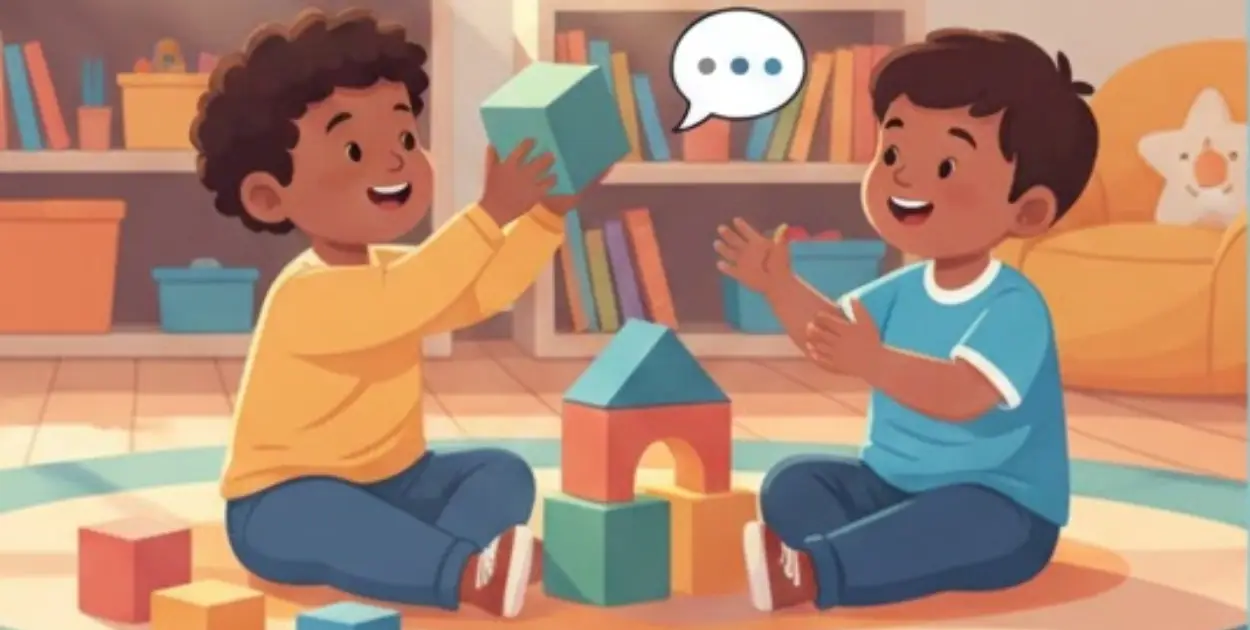
Imagine two children building a tower with blocks.
One child says,
“Can you pass me the big block?”
The other replies,
“Let’s make it taller.”
This simple interaction builds vocabulary, cooperation, and problem-solving skills without feeling like a lesson.
4. Positive Conversations Build Confidence
Children are more likely to communicate when adults truly listen.
Instead of correcting every mistake, supportive adults encourage conversation.
For example:
Child:
“I goed to the park.”
Adult:
“You went to the park? That sounds fun! What did you do there?”
This response gently models the correct word while keeping the conversation positive.
Children gain confidence when they know their ideas matter.
5. Asking Questions Encourages Thinking
Questions help children become active learners.
Instead of giving all the answers, adults can ask open-ended questions like:
- What do you think will happen next?
- Why do you think the ice melted?
- How could we build a stronger tower?
- What was your favorite part of the story?
- How would you solve this problem?
These questions encourage children to think, explain, and communicate their ideas clearly.
6. Everyday Activities Become Learning Moments
Children do not stop learning after school.
Many daily routines become opportunities to improve communication.
Examples include:
During breakfast
Talk about colors, shapes, and foods.
While shopping
Count fruit, read signs, and name different objects.
Walking outside
Describe birds, flowers, weather, and sounds.
Cooking together
Introduce new words like “measure,” “mix,” “pour,” and “ingredients.”
These small conversations happen naturally and add up over time.
7. Communication Skills Support Lifelong Success
Strong communication skills help children throughout their lives.
Children who communicate well are often better able to:
- Make friends
- Work in teams
- Express emotions appropriately
- Ask for help when needed
- Understand classroom instructions
- Solve conflicts peacefully
- Build self-confidence
These skills continue to benefit them as they grow into teenagers and adults.
How Early Childhood Environments Shape Cognitive Growth
Communication is only one part of a child’s development. Children also build cognitive skills, which are the mental abilities they use to learn, think, remember, solve problems, and make decisions.
The early years are a time of rapid brain growth. During this period, every experience helps shape how children understand the world. A supportive environment encourages curiosity, while a poor environment can limit opportunities to learn.
The good news is that cognitive growth happens through simple, everyday experiences. Children do not need expensive toys or complicated lessons. They learn best through meaningful interactions, play, exploration, and caring relationships.
What Is Cognitive Growth?
Cognitive growth refers to how children develop the ability to:
- Think clearly
- Learn new information
- Remember experiences
- Solve problems
- Focus on tasks
- Make decisions
- Understand cause and effect
- Use imagination
- Develop reasoning skills
These abilities continue to improve throughout childhood, but the foundation is built during the early years.
Read more: The Lifelong Psychological Impact of Neonatal Brain Damage: A Parent and Child Perspective.
Curiosity Is the Beginning of Learning
Young children are naturally curious. They want to know how things work and why things happen.
Questions like these are signs of healthy cognitive development:
- Why is the sky blue?
- Where does the rain come from?
- Why do birds fly?
- What happens if I mix these colors?
Instead of giving quick answers, adults can encourage thinking by asking questions in return.
For example:
Child: “Why do leaves fall?”
Adult: “What do you notice about the weather when leaves begin to fall?”
This type of conversation helps children observe, think, and make connections on their own.
Play Helps the Brain Grow
Play is often called the “work of childhood” because children learn so much while having fun.
During play, children practice:
- Problem-solving
- Planning
- Creativity
- Decision-making
- Memory
- Attention
- Communication
- Teamwork
For example, when children build a tower with blocks, they learn about balance, size, shapes, and cause and effect.
If the tower falls, they naturally ask themselves:
“What can I do differently next time?”
This simple activity strengthens critical thinking without feeling like a lesson.
Reading Builds Thinking Skills
Reading does more than improve vocabulary.
Books encourage children to:
- Predict what happens next
- Remember characters
- Understand emotions
- Recognize patterns
- Build imagination
- Connect stories to real life
Parents can make reading more interactive by asking simple questions like:
- What do you think will happen next?
- Why is the character happy?
- What would you do in this situation?
These conversations improve both communication and cognitive development.
Exploring Nature Encourages Discovery
Nature is one of the best classrooms for young children.
A walk outside offers countless learning opportunities.
Children can:
- Count flowers
- Compare leaves
- Watch insects
- Listen to birds
- Feel different textures
- Observe the weather
These experiences strengthen observation skills and encourage curiosity about the natural world.
Everyday Activities Teach Problem-Solving
Children learn through ordinary daily routines.
Simple activities become valuable learning experiences.
For example:
Cooking Together
Children learn:
- Measuring
- Counting
- Following steps
- Comparing sizes
- Waiting patiently
Shopping Together
Children practice:
- Recognizing numbers
- Naming foods
- Making choices
- Comparing prices
- Following directions
Cleaning Up Toys
Children learn:
- Sorting
- Organizing
- Categorizing
- Responsibility
Learning does not only happen during school hours.
Positive Relationships Support Brain Development
Children learn best when they feel safe and supported.
When adults respond with patience and encouragement, children become more willing to:
- Try new activities
- Solve difficult problems
- Ask questions
- Learn from mistakes
Fear and constant criticism can make children hesitant to explore.
Supportive relationships build confidence, and confident children are often more eager to learn.
Characteristics of High-Quality Early Childhood Environments
Not all learning environments provide the same opportunities. High-quality early childhood environments help children grow academically, socially, emotionally, and physically.
Whether it is a home, preschool, or daycare, certain qualities make an environment more supportive of healthy development.
1. A Safe and Secure Environment
Children learn best when they feel protected.
A safe environment includes:
- Clean spaces
- Safe furniture
- Age-appropriate toys
- Adult supervision
- Emergency plans
- Childproof areas
Feeling safe allows children to focus on learning instead of worrying about danger.
2. Warm and Caring Relationships
Positive relationships are at the heart of every successful learning environment.
Children need adults who:
- Listen carefully
- Encourage effort
- Show kindness
- Respect feelings
- Offer guidance instead of punishment
Strong relationships help children build trust and confidence.
3. Opportunities to Learn Through Play
High-quality environments understand that children learn through active experiences.
Learning materials may include:
- Building blocks
- Puzzles
- Art supplies
- Books
- Musical instruments
- Science activities
- Outdoor play equipment
These resources encourage exploration instead of memorization.
4. Inclusive Learning for Every Child
Every child deserves opportunities to learn.
Inclusive environments welcome children with different:
- Abilities
- Languages
- Cultures
- Learning styles
- Family backgrounds
Children learn empathy and respect when they interact with people from diverse backgrounds.
5. Organized Learning Spaces
Children feel more comfortable in organized environments.
Simple features include:
- Clearly labeled storage
- Reading corners
- Art stations
- Quiet spaces
- Play areas
- Easy-to-reach learning materials
Organization helps children become more independent.
6. Encouragement Instead of Fear
Mistakes are part of learning.
In high-quality environments, adults focus on:
- Encouraging effort
- Praising improvement
- Teaching problem-solving
- Helping children learn from mistakes
This creates a growth mindset that benefits children throughout life.
7. Learning That Matches the Child’s Age
Children learn best when activities match their stage of development.
For younger children:
- Simple puzzles
- Songs
- Sensory play
For older preschoolers:
- Storytelling
- Counting games
- Science experiments
- Creative projects
Age-appropriate activities keep children interested without overwhelming them.
Why Safety in Early Childhood Environments Matters
Safety in early childhood environments goes far beyond preventing accidents.
Children also need emotional safety, healthy routines, and supportive relationships to grow and learn.
When children feel secure, they are more willing to explore, ask questions, and try new experiences.
Physical Safety
Physical safety protects children from injury.
Important safety practices include:
- Childproof furniture
- Safe playground equipment
- Clean classrooms
- Secure entrances
- Safe storage of cleaning supplies
- Regular safety checks
- Adult supervision
A safe physical environment allows children to play confidently.
Emotional Safety
Children also need to feel emotionally safe.
This means they know they can:
- Ask questions
- Make mistakes
- Express feelings
- Share ideas
- Try new things
Adults create emotional safety by listening with patience and treating children with respect.
Children who feel emotionally secure often become more confident learners.
Healthy Daily Routines
Consistent routines help children feel calm and prepared.
Healthy routines include:
- Regular meals
- Enough sleep
- Outdoor play
- Learning activities
- Quiet reading time
- Consistent bedtimes
Predictable routines reduce stress and help children develop self-control.
Nutrition Supports Learning
Healthy food provides the energy children need to learn.
Balanced meals support:
- Brain development
- Memory
- Attention
- Physical growth
- Emotional well-being
Nutritious foods combined with regular physical activity create a strong foundation for healthy development.
Preventing Bullying and Unsafe Behavior
Even young children need guidance about kindness and respect.
Adults should teach children how to:
- Share
- Take turns
- Use kind words
- Respect differences
- Solve disagreements peacefully
Learning these skills early helps children build healthy friendships.
Creating Safe Digital Habits
Technology is now part of many children’s lives.
Used wisely, it can support learning. However, too much screen time or unsupervised internet use may reduce opportunities for active play and face-to-face communication.
Parents and caregivers can encourage healthy digital habits by:
- Choosing age-appropriate educational content
- Watching or playing together when possible
- Setting reasonable screen time limits
- Balancing technology with outdoor play, reading, and creative activities
- Talking with children about online safety as they grow older
Technology should support learning, not replace real-world experiences and human interaction.
The Role of Parents in Early Childhood Development
Parents are a child’s first and most important teachers.
Children begin learning long before they enter preschool, and everyday family interactions have a lasting impact on communication, confidence, and thinking skills.
Parents do not need to be experts. Small, consistent actions each day can make a meaningful difference.
Here are simple ways parents can support healthy development:
Talk Throughout the Day
Describe what you are doing, ask questions, and encourage your child to respond.
Read Every Day
Even 15–20 minutes of reading together helps build language and imagination.
Encourage Questions
Welcome curiosity and explore answers together instead of rushing to provide every answer.
Make Time for Play
Pretend play, outdoor games, drawing, and building activities all support learning.
Celebrate Effort
Praise children for trying, learning, and improving—not just for getting the “right” answer.
The Role of Teachers in Early Childhood Education
Teachers help create environments where children feel safe, valued, and excited to learn.
Great teachers do more than teach facts. They inspire curiosity and help children develop important life skills.
Effective teachers:
- Encourage questions
- Listen carefully
- Give positive feedback
- Create engaging learning activities
- Support teamwork
- Respect each child’s pace of development
- Build strong partnerships with families
When parents and teachers work together, children receive consistent support both at home and in school.
Learning Through Play: The Heart of Early Childhood Education
Play is much more than entertainment. It is one of the most effective ways young children learn about themselves, other people, and the world around them.
Through play, children explore ideas, test solutions, express emotions, and build confidence. They develop important communication and thinking skills without even realizing they are learning.
Whether children are pretending to run a grocery store, building a castle with blocks, or exploring a park, every playful experience helps strengthen their growing minds.
Types of Play That Support Development
Different kinds of play teach different skills.
1. Pretend Play
Pretend or imaginative play encourages children to think creatively and communicate with others.
Examples include:
- Playing house
- Running a pretend restaurant
- Dressing up as doctors or firefighters
- Using toys to tell stories
Pretend play helps children:
- Build vocabulary
- Understand emotions
- Practice problem-solving
- Improve social skills
- Develop creativity
2. Building and Construction Play
Using blocks, building sets, or simple household items teaches children how things fit together.
Children learn about:
- Balance
- Shapes
- Size
- Planning
- Cause and effect
- Patience
These activities also strengthen fine motor skills.
3. Outdoor Play
Nature offers endless opportunities for learning.
Outdoor activities may include:
- Running
- Climbing
- Digging
- Collecting leaves
- Watching insects
- Planting flowers
Outdoor play improves physical health while encouraging observation, curiosity, and exploration.
4. Creative Play
Art and music allow children to express themselves in unique ways.
Creative activities include:
- Drawing
- Painting
- Singing
- Dancing
- Craft projects
- Playing simple instruments
Creative play supports emotional development and helps children communicate feelings that they may not yet have words to describe.
5. Puzzle and Memory Games
Simple puzzles and matching games improve:
- Memory
- Concentration
- Logical thinking
- Pattern recognition
- Persistence
Children also experience the satisfaction of solving problems on their own.
Technology in Early Childhood Learning
Technology has become part of everyday life, and many young children use digital devices at home or school.
When used thoughtfully, technology can support learning. However, it should never replace conversations, outdoor play, hands-on activities, or family time.
The best learning happens when technology is balanced with real-world experiences.
Benefits of Educational Technology
High-quality educational apps and programs can help children:
- Learn letters and numbers
- Listen to stories
- Practice new vocabulary
- Explore science concepts
- Develop creativity
- Build problem-solving skills
Many interactive learning tools encourage children to participate rather than simply watch.
Possible Challenges
Too much screen time may reduce opportunities for:
- Active play
- Face-to-face conversations
- Physical activity
- Creative exploration
- Social interaction
Children learn best when screens are only one small part of a balanced daily routine.
Tips for Healthy Technology Use
Parents and caregivers can make technology more meaningful by:
- Choosing age-appropriate educational content
- Watching videos or playing learning games together
- Asking questions about what children are watching
- Setting clear limits on recreational screen time
- Encouraging outdoor play every day
- Reading printed books alongside digital learning
Technology should support curiosity, not replace human connection.
How to Create a High-Quality Early Childhood Environment at Home
Parents often wonder whether they need expensive toys or special learning programs.
The answer is no.
Children benefit most from caring relationships, meaningful conversations, and everyday experiences.
Here are practical ways to create a high-quality early childhood environment at home.
1. Read Together Every Day
Reading builds language, imagination, and listening skills.
Even reading the same favorite story again helps children learn.
2. Talk Throughout the Day
Describe what you are doing, ask questions, and encourage your child to share ideas.
Simple conversations help children develop strong communication skills.
3. Encourage Curiosity
When children ask questions, explore the answers together.
Instead of immediately providing every answer, encourage them to think.
For example:
“What do you think will happen if we plant this seed?”
Questions like this help children become active learners.
4. Create a Safe Place to Explore
Provide a clean, organized area where children can:
- Build
- Draw
- Read
- Play
- Experiment
Children learn more when they feel safe trying new things.
5. Limit Distractions
Reduce unnecessary background television or constant device use during family time.
Quiet conversations help children focus and improve listening skills.
6. Praise Effort
Instead of saying,
“You’re so smart.”
Try saying,
“I’m proud of how hard you worked.”
This teaches children that learning comes through practice and persistence.
7. Build Daily Routines
Simple routines create security.
Try to keep regular times for:
- Meals
- Reading
- Outdoor play
- Homework
- Bedtime
Predictable routines help children feel calm and confident.
8. Encourage Independent Thinking
Allow children to make simple choices.
Examples include:
- Choosing a bedtime story
- Picking clothes for the day
- Deciding which healthy snack to eat
- Selecting an art activity
Making choices builds confidence and decision-making skills.
9. Spend Time Outdoors
Nature encourages observation and curiosity.
Children can:
- Watch birds
- Collect leaves
- Count flowers
- Observe insects
- Feel different textures
Outdoor experiences inspire learning in ways that indoor activities cannot always provide.
10. Be a Positive Role Model
Children learn by watching adults.
Show kindness, patience, curiosity, and respect in your everyday actions.
When adults enjoy learning, children often develop the same attitude.
Common Mistakes That Can Limit Learning
Even caring adults sometimes create environments that make learning more difficult.
Being aware of these habits can help families make positive changes.
~ Expecting Every Child to Develop at the Same Pace
Children grow and learn differently.
Comparing one child to another can create unnecessary pressure.
Instead, celebrate each child’s progress over time.
~ Talking More Than Listening
Healthy communication is a two-way process.
Give children time to finish their thoughts and express themselves.
Listening carefully shows that their ideas matter.
~ Overusing Screens
Digital devices can be useful learning tools, but they should not replace conversations, creative play, physical activity, or reading together.
Balance is the key.
~ Solving Every Problem for the Child
Children develop confidence when they solve simple challenges on their own.
Offer guidance when needed, but also allow them to think through problems independently.
~ Forgetting the Importance of Play
Sometimes adults focus only on academic learning.
Play is not a distraction from learning—it is one of the best ways children develop communication, creativity, and thinking skills.
Read more: How Speech Disorders Affect Self-Esteem and Mental Health in Children and Adults
Exploring Careers in Early Childhood Education
The field of early childhood education offers rewarding opportunities for people who enjoy helping young children learn and grow.
Professionals in this field support children’s development during the years when learning happens most rapidly.
Some common careers include:
- Preschool teacher
- Kindergarten teacher
- Childcare provider
- Early intervention specialist
- Speech and language therapist (speech-language pathologist)
- School counselor
- Child psychologist
- Special education teacher
- Curriculum developer
- Child development researcher
People searching for early childhood education jobs can find opportunities in schools, childcare centers, nonprofit organizations, hospitals, government programs, and private educational institutions.
These careers require different levels of education and training depending on the role and local regulations, but all share the goal of helping children build a strong foundation for lifelong learning.
Frequently Asked Questions
1. What makes a high-quality early childhood environment?
A high-quality environment is safe, welcoming, organized, inclusive, and filled with opportunities to explore, play, read, and communicate. Caring adults and positive relationships are also essential.
2. Why is safety important in early childhood environments?
Safety allows children to explore with confidence. Physical safety helps prevent injuries, while emotional safety encourages children to ask questions, make mistakes, and express themselves without fear.
3. How does play help children’s development?
Play strengthens communication, creativity, problem-solving, memory, cooperation, and emotional understanding. It is one of the most effective ways young children learn.
4. How can parents support communication skills at home?
Parents can talk with their children throughout the day, read together regularly, ask open-ended questions, listen carefully, and encourage children to express their ideas and feelings.
5. Do children learn only in school?
No. Learning happens everywhere. Everyday experiences at home, in parks, during shopping trips, while cooking, and through conversations all contribute to healthy development.
Key Takeaways
- Early childhood environments shape communication, learning, emotional well-being, and cognitive growth.
- Safe, supportive, and stimulating environments help children build confidence and curiosity.
- Positive relationships with parents, caregivers, and teachers are essential for healthy development.
- Play is one of the most powerful ways children learn new skills.
- Reading, conversation, exploration, and daily routines all contribute to lifelong learning.
- Technology can support education when used thoughtfully and balanced with real-world experiences.
- Every child develops at their own pace, and supportive environments help them reach their potential.
Final Thoughts
The early years of a child’s life provide a unique opportunity to build a strong foundation for the future. Every story shared, question answered, game played, and encouraging conversation helps shape how children communicate, think, and understand the world.
Creating high-quality early childhood environments does not require expensive classrooms or advanced technology. It begins with caring adults who provide safety, encouragement, and opportunities to explore. Whether at home, in a preschool, or within the community, these everyday experiences help children develop the confidence, curiosity, and skills they need for lifelong success.
By investing time, patience, and attention during the early years, parents, caregivers, and educators can create environments where children feel safe to learn, excited to ask questions, and ready to reach their full potential. In areas where even adequate childcare is either unaffordable or simply inaccessible, it can be hard to find time for imaginative situations with your child.

Maria holds an MS in Psychology with a specialization in Social Psychology. She is a research-oriented writer with a strong academic background in psychological and behavioral sciences. Her work focuses on bridging academic research and public understanding by simplifying complex psychological theories and social dynamics. She writes about the relationship between society, mental health, and human behavior, making evidence-based ideas more accessible and practical for readers.