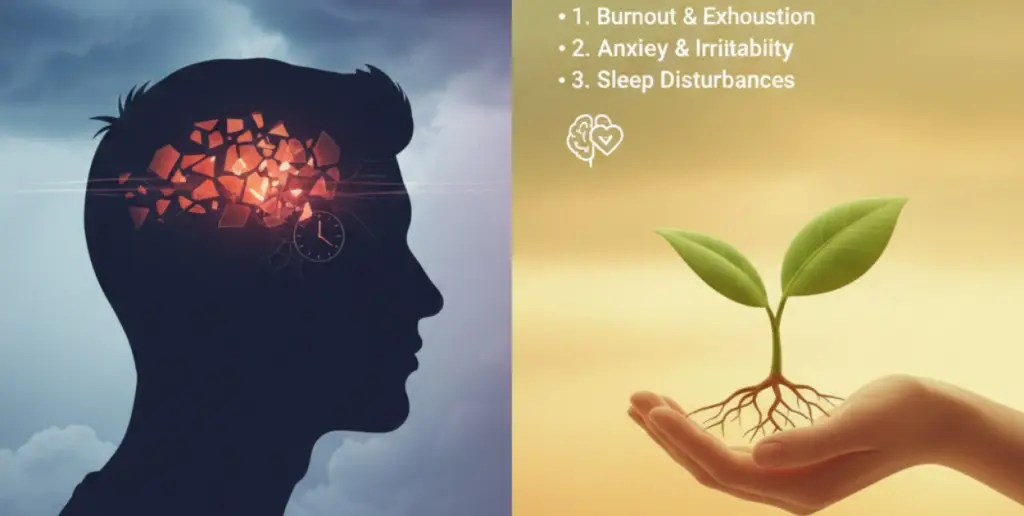
In the United States, the professional work culture is complicated. On the one hand, there is an increasing emphasis on taking care of your mental health and striving for balance. On the other hand, working hard is still put at a premium, and even permissive bosses are only so flexible when it comes to deadlines and expectations.
Some jobs are simply made to be high-pressure. That’s great for people who are interested in that kind of work, but how much is too much, and what can you do when you’ve hit your wall?
In this article, we’ll take a look at how to recognize when a high-stress career is taking a toll on your mental health, and what you should do about it.
Examples of High Stress Careers
There are tons of different ways that a job can be stressful. Healthcare professionals for example, spend hours on their feet, contributing to physical stress. They deal with many high-pressure situations, producing mental stress.
There is also a component of emotional fatigue. Doctors and nurses experience tragedy at significantly higher intervals than the general population. These factors accumulate into a very difficult profession.
Law enforcement careers also deal with physical stress, as well as high levels of trauma and anxiety. They see significant amounts of human suffering, witness alarming behaviors, and are frequently made to fear for their safety and the safety of others.
Then there is the more generalized corporate stress. A professional who is not in any particular physical or emotional jeopardy, but who nevertheless feels a constant sense of emotional fatigue from bearing the weight of their job. Stress doesn’t necessarily have to have a singular source. The bottom line is, when your job makes you feel bad all the time, it’s a problem.
How do you recognize when it’s become too much?
Signs That You’re Under More Stress Than You Realize
One of the most nefarious things about work-related stress is that it very quickly becomes your baseline experience.
Often you don’t even fully realize that you’ve been under a significant amount of stress until you experience a brief moment of relief from it. It’s only then that you come to understand how much your everyday existence is putting you through, and the next few headings will examine indications that the stress you’re experiencing at work is more than normal.
Interrupted Sleep
High levels of stress can very literally interfere with the way your body’s circadian rhythm operates. There’s the obvious factor that when you’re worried about something, it’s hard to go to sleep, but there’s more happening at the chemical level that’s harder to detect.
Even if you’re falling asleep at the right time and getting up at a reasonable hour, you may still be experiencing a lower quality of sleep than your body needs. This is because stress is the byproduct of a chemical called cortisol. Cortisol is a component of the fight or flight response and generally develops in situations where the stressor is more ongoing.
Adrenaline, the other fight or flight response chemical, is activated in acute moments of stress. Why is this important? Cortisol is also just a regular component of how our body functions. It’s actually the chemical that begins to wake our brains up in the morning.
Cortisol levels are supposed to spike at around 3 a.m. so that your body feels reasonably alert when it’s time to get up at six or seven. However, if your cortisol is significantly out of range, it can impact your restfulness at various stages of the sleep cycle, resulting in fatigue despite hitting your daily recommended sleep.
In other words, if you’re sleeping the right amount but still feel tired all the time, it’s a good indication that you’re experiencing stress, particularly if there are no physical symptoms that explain the experience.
Muscle Pain, Trembling, or Tightness
High levels of stress can also result in spontaneous muscle contractions. These, once again, are attributable to high levels of cortisol.
This can be a difficult symptom to detect because, generally, when people experience muscle pain or even odd spasms, they attribute it to a physical cause.
Sometimes, that of course is the case, if you’ve taken up a new exercise routine or maybe gotten very into pickleball recently.
But if the symptoms persist and they aren’t directly linked to any particular activity, it’s another indication that you’re experiencing a physical reaction to stress.
Do You Dread Going Into Work?
Ultimately, that’s often the clearest symptom that job-related stress has gone too far. If you feel depressed on Sunday afternoons, or if you lie in bed at night dreading the thought of getting dressed and walking out the door to your job, that means you’re unhappy. How long do you really want to persist in that kind of lifestyle?
There are a few things you can do to manage your work-related stress. We’ll describe those in the next few headings.
Mindfulness and Meditation Behaviors
There’s an old saying, everyone should meditate for fifteen minutes a day, unless you don’t have time, then you should meditate for thirty. The meaning, of course, is that the more hectic your life is, the more important it becomes to slow down and focus on your breathing.
Mindfulness behaviors like meditation, yoga, forest bathing, etc., are designed to both root you in the moment and flood your body with soothing chemicals like serotonin. Then you’ll experience both acute relief and long-term stress reduction as your baseline begins to change.
Exercise
Exercise can also release serotonin and dopamine. Done regularly, it’s another good way to naturally reduce cortisol and improve your baseline experience.
Like meditation, it can be difficult to fit into an already busy routine, but then the argument can be made that that’s all the more reason to do it.
To note that you don’t necessarily need to start strong, even going on a walk during your lunch break can provide the benefit you’re looking for. Bonus points if you do it outside. Outdoor experiences can also reduce stress levels.
Treat the Problem, Not Just the Symptoms
Holistic methods of reducing stress are great for your overall experience, but it’s also good to remember that everything we’ve described up until this point is addressing the symptoms, not the problem itself. If your job is making you unhappy, you should look for a way to change that. If you can’t, change your job.
We spend so much of our time at work. Giving forty hours a week to a career path that is making you miserable is not just bad for your stress levels; it’s bad for your physical health. There are better, more fulfilling roles out there. Find the one that makes the most sense for you.

Maria holds an MS in Psychology with a specialization in Social Psychology. She is a research-oriented writer with a strong academic background in psychological and behavioral sciences. Her work focuses on bridging academic research and public understanding by simplifying complex psychological theories and social dynamics. She writes about the relationship between society, mental health, and human behavior, making evidence-based ideas more accessible and practical for readers.