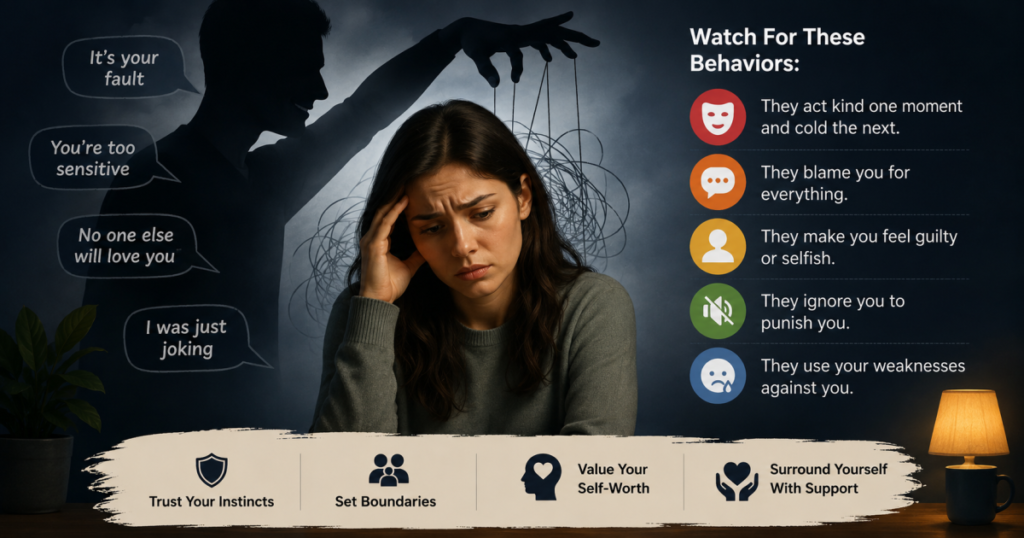
Have you ever walked away from a conversation feeling confused, guilty, or emotionally drained without knowing why? Sometimes, people use subtle psychological tricks to control others without being obvious about it. In this article we will discuss 15 Signs Someone Is Manipulating You Without You Realizing.
Recognizing the signs that someone is manipulating you is important for protecting your mental and emotional health. Manipulators often use guilt, fear, confusion, or emotional pressure to get what they want. Over time, this can damage your confidence and make you question your own feelings. Read more about dark empathy.
In this article, you’ll learn the most common emotional manipulation signs, how manipulation works, and what you can do to protect yourself from toxic behavior.
What Is Psychological Manipulation?
Psychological manipulation happens when someone tries to control another person’s emotions, thoughts, or actions for personal gain. Instead of communicating honestly, manipulators use hidden tactics to influence people.
These tactics may include:
- Guilt tripping
- Emotional blackmail
- Gaslighting
- Silent treatment
- Blame shifting
- Victim playing
- Controlling behavior
Manipulation is often subtle at first. That’s why many people don’t notice it until the emotional damage becomes serious.
Not every manipulative person is intentionally cruel, but repeated toxic patterns can still hurt relationships and emotional well-being.
15 Signs Someone Is Manipulating You
Here are the most common toxic behavior signs that may show someone is emotionally manipulating you.
1. They Make You Feel Guilty
One of the biggest emotional manipulation signs is guilt tripping. Manipulators make you feel bad so you will do what they want.
They may say things like:
- “After everything I’ve done for you…”
- “You only care about yourself.”
- “I guess I don’t matter to you.”
Instead of respecting your boundaries, they use guilt as pressure.
2. They Gaslight You
Gaslighting is one of the most damaging manipulation tactics. It happens when someone makes you doubt your memory, feelings, or reality.
Common gaslighting signs include:
- Denying things they clearly said
- Calling you “too sensitive”
- Telling you you’re imagining things
- Twisting facts during arguments
Over time, gaslighting can lower your confidence and make you dependent on the manipulator’s version of reality.
3. They Play the Victim
Manipulators often avoid responsibility by acting like the victim in every situation.
Even when they hurt others, they shift attention to their own pain. This tactic creates sympathy and distracts from their harmful behavior.
Victim playing is commonly used together with blame shifting.
4. They Use the Silent Treatment
The silent treatment is another common form of emotional control. Instead of talking openly, they ignore you to punish you emotionally.
This behavior can make you anxious, desperate for approval, and willing to apologize even when you did nothing wrong.
Healthy communication solves problems. Manipulation creates emotional distance to gain power.
5. They Constantly Blame You
Manipulators rarely take responsibility for their actions.
Instead, they use blame shifting to make everything your fault. Even small disagreements somehow become about your mistakes.
This can make you feel emotionally exhausted and constantly defensive.
6. They Twist Your Words
Have you noticed someone changing the meaning of what you say during arguments?
Manipulators often twist conversations to confuse you or make you look wrong. This tactic helps them avoid accountability while keeping control.
Eventually, you may stop expressing yourself honestly because you fear conflict.
7. They Use Emotional Blackmail
Emotional blackmail happens when someone uses fear, guilt, or threats to control your choices.
Examples include:
- Threatening to leave you
- Saying they’ll hurt themselves
- Using love as a reward or punishment
This creates emotional pressure instead of healthy communication.
8. They Want to Control Your Decisions
Strong controlling behavior is a major warning sign.
Manipulators may try to control:
- Who you spend time with
- What you wear
- Your finances
- Your career decisions
- Your personal boundaries
At first, this behavior may seem caring or protective, but over time it becomes restrictive and unhealthy.
9. They Create Confusion
Manipulators often send mixed messages.
One day they are loving and kind. The next day they are cold or angry. This emotional inconsistency keeps people confused and emotionally attached.
You may spend more time trying to “fix” the relationship than noticing the toxic behavior itself.
10. They Use Your Weaknesses Against You
Healthy relationships protect vulnerabilities. Manipulative people use them as weapons.
They may bring up your fears, insecurities, or past mistakes during arguments to gain emotional control.
This behavior damages trust and emotional safety.
11. They Make You Feel Responsible for Their Happiness
Manipulators often act as if their emotional well-being depends entirely on you.
They may say:
- “You’re the only person I have.”
- “If you leave, I’ll fall apart.”
- “You make me miserable.”
This creates unhealthy emotional pressure and guilt.
12. They Isolate You From Others
Isolation is a powerful manipulation tactic.
A manipulative person may slowly pull you away from friends, family, or support systems by:
- Creating drama
- Starting jealousy
- Criticizing your loved ones
- Demanding all your attention
Isolation increases emotional dependence and makes manipulation easier.
13. They Act Nice Only When They Want Something
Manipulators are often selectively kind.
They may suddenly become affectionate, generous, or apologetic when they need something from you. Once they get what they want, the toxic behavior returns.
This emotional cycle can become addictive and confusing.
14. They Ignore Your Boundaries
Healthy people respect boundaries. Manipulators push against them.
They may:
- Pressure you after you say no
- Invade your privacy
- Ignore your emotional needs
- Make you feel guilty for setting limits
Repeated boundary violations are serious toxic behavior signs.
15. You Constantly Feel Drained Around Them
Sometimes your emotional state says more than words.
If you regularly feel:
- Anxious
- Confused
- Guilty
- Emotionally exhausted
- Afraid of upsetting them
It means that you may be dealing with emotional manipulation.
Your body and emotions often recognize unhealthy behavior before your mind fully understands it.
How to Protect Yourself From Manipulators
Recognizing manipulation is the first step. The next step is protecting your emotional health.
Here are some ways to respond to manipulative behavior:
Set Clear Boundaries
Be direct about what behavior you will and will not accept.
For example:
- “I’m not comfortable with that.”
- “Please don’t speak to me that way.”
- “I need time to think.”
Healthy boundaries reduce emotional control.
Trust Your Feelings
If something feels emotionally unhealthy, don’t ignore it.
Manipulators often try to make people doubt themselves. Trusting your instincts can help you stay grounded in reality.
Avoid Over-Explaining Yourself
Manipulators often use long conversations to confuse or pressure people.
Simple and firm responses are usually more effective than defending yourself endlessly.
Keep Strong Support Systems
Stay connected with trusted friends, family, or supportive communities.
Manipulation becomes more powerful when people feel isolated.
Document Important Conversations
In difficult situations, especially involving gaslighting, writing things down can help you stay clear about what actually happened.
This can protect your emotional clarity.
Consider Professional Support
Therapists and counselors can help people recover from emotional manipulation and rebuild confidence.
Support is especially important in long-term toxic relationships.
Final Thoughts
Learning the signs someone is manipulating you can help you protect your emotional well-being and relationships. Manipulation often starts subtly through guilt, confusion, or emotional pressure, but over time it can seriously affect confidence and mental health.
Common emotional manipulation signs include gaslighting, guilt tripping, blame shifting, silent treatment, victim playing, and controlling behavior. The earlier you recognize these patterns, the easier it becomes to set boundaries and protect yourself.
Healthy relationships are built on honesty, respect, communication, and emotional safety — not control.
If someone constantly makes you feel guilty, confused, anxious, or emotionally drained, it may be time to reevaluate that relationship.
FAQs
How do manipulators control people?
Manipulators often control people through emotional pressure, guilt, fear, gaslighting, emotional blackmail, and controlling behavior. These tactics create confusion and emotional dependence.
What are signs of emotional manipulation?
Common signs include guilt tripping, silent treatment, blame shifting, victim playing, gaslighting, controlling behavior, and making you constantly feel responsible for another person’s emotions.
Can manipulation be unintentional?
Yes. Some people use manipulative behaviors without fully realizing it because of unhealthy communication habits or past experiences. However, repeated manipulation can still harm relationships emotionally.
How do you respond to manipulation?
You can respond by setting clear boundaries, staying calm, trusting your feelings, limiting emotional reactions, and seeking support from trusted people or professionals when necessary.

Maria holds an MS in Psychology with a specialization in Social Psychology. She is a research-oriented writer with a strong academic background in psychological and behavioral sciences. Her work focuses on bridging academic research and public understanding by simplifying complex psychological theories and social dynamics. She writes about the relationship between society, mental health, and human behavior, making evidence-based ideas more accessible and practical for readers.