Have you ever met someone who seemed caring, emotionally intelligent, and charming, but somehow left you feeling confused, controlled, or emotionally drained? That person may show signs of dark empathy psychology.
A dark empath understands emotions very well, but instead of using emotional awareness to help others, they may use it to manipulate, influence, or control people. Unlike obvious toxic people, dark empaths often appear kind, supportive, and socially skilled. This makes them harder to recognize.
In recent years, psychologists and online discussions have shown growing interest in the idea of the dark empath personality. Many people now want to understand how emotional intelligence can sometimes be used in unhealthy ways.
In this article, we will explore the dark empathy meaning, common dark empath traits, how they compare to narcissists, and how you can protect yourself from emotional manipulation.
What Is Dark Empathy?
Dark empathy refers to a personality style where a person has strong emotional understanding but also shows manipulative or harmful traits.
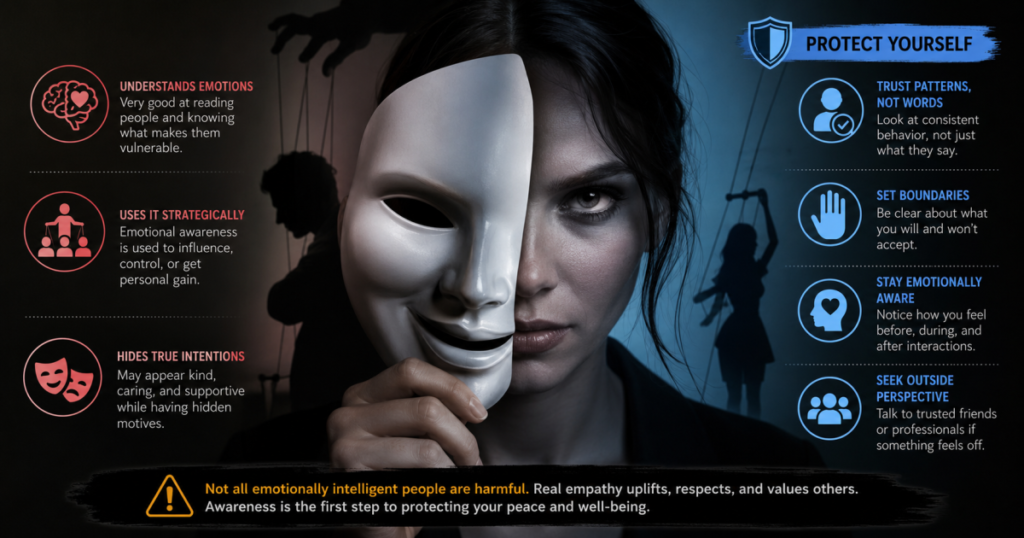
A dark empath can read emotions very accurately. They know how people feel, what hurts them, and what makes them vulnerable. However, instead of using this emotional insight for support or kindness, they may use it for personal gain.
The concept is often connected to the dark triad personality, which includes:
- Narcissism
- Machiavellianism
- Psychopathy
People with these traits may show selfish behavior, lack of empathy, or manipulation. A dark empath is different because they do understand emotions deeply. That emotional awareness makes their behavior more subtle and sometimes more dangerous.
Unlike cold or aggressive manipulators, dark empaths can appear friendly, funny, intelligent, and emotionally supportive. This hidden side is what makes them difficult to identify.
Some experts believe dark empaths may use emotional connection as a tool for psychological control and covert manipulation.
Traits of a Dark Empath
Understanding common dark empath traits can help you recognize unhealthy patterns before they become emotionally damaging.
High Emotional Intelligence
One of the strongest signs of a dark empath is high emotional intelligence.
They are skilled at:
- Reading body language
- Understanding emotional reactions
- Knowing what people want to hear
- Identifying fears and insecurities
At first, this can feel comforting. They may seem like excellent listeners who truly understand you.
But over time, this emotional awareness can become a tool for emotional manipulation. They may learn your weak points and later use them during arguments, guilt trips, or controlling situations.
For example, they may:
- Bring up personal insecurities during conflict
- Use emotional pressure to get what they want
- Pretend to deeply understand your pain while secretly using it against you
Because of their emotional intelligence, many dark empaths are socially successful and highly persuasive. Read more about dark psychology
Manipulative Communication
Dark empaths are often very skilled communicators.
They know how to:
- Change their tone depending on the situation
- Make people feel guilty
- Use charm to gain trust
- Twist conversations in subtle ways
This is where manipulation psychology becomes important.
A dark empath may not openly insult or attack someone. Instead, they often use indirect tactics like:
- Passive-aggressive comments
- Silent treatment
- Gaslighting
- Playing the victim
- Fake concern
For example, they may say:
“I’m only trying to help you.”
Or:
“You’re too sensitive.”
These statements can create confusion and self-doubt. Over time, the victim may start questioning their own feelings and judgment.
This type of behavior is common in many toxic personalities because it slowly weakens emotional confidence.
Fake Compassion
Another common sign of the dark empath personality is fake compassion.
Dark empaths may appear deeply caring in public or during emotional conversations. They know exactly how empathy should look.
However, their kindness may disappear when:
- They do not get attention
- Someone disagrees with them
- They lose control of a situation
- Their image is threatened
In many cases, their compassion is selective and strategic.
They may comfort someone only to:
- Gain trust
- Build emotional dependency
- Receive praise
- Control relationships
This is why dark empathy can feel emotionally confusing. The person may switch between warmth and coldness very quickly.
Victims often stay attached because they continue hoping the “good side” will return.
Dark Empath vs Narcissist
Many people wonder about the difference between a dark empath and a narcissist.
Both personalities may show:
- Manipulation
- Self-centered behavior
- Emotional control
- Lack of healthy empathy
But there are important differences.
A narcissist often seeks attention, admiration, and power openly. Their behavior can be easier to notice over time.
A dark empath, however, may appear emotionally caring and socially aware. They are usually better at hiding harmful intentions.
Here is a simple comparison:
| Dark Empath | Narcissist |
| Emotionally aware | Emotionally self-focused |
| Uses empathy strategically | Often lacks emotional understanding |
| More socially skilled | More attention-seeking |
| Uses subtle manipulation | May use direct control |
| Appears compassionate | Appears superior |
Dark empaths can sometimes be more emotionally dangerous because their behavior is harder to identify early.
Their emotional awareness allows them to blend into friendships, workplaces, and relationships without appearing openly toxic.
How Dark Empaths Manipulate People
Dark empaths often rely on subtle forms of covert manipulation rather than obvious aggression.
Here are some common tactics they use:
Emotional Guilt
They make people feel responsible for their emotions.
For example:
- “After everything I’ve done for you…”
- “You clearly don’t care about me.”
This creates emotional pressure and guilt.
Love Bombing
At the beginning of relationships, dark empaths may give excessive attention, affection, and validation.
This creates emotional attachment quickly.
Later, they may withdraw affection to gain control.
Gaslighting
Gaslighting is a form of psychological control where someone causes another person to doubt their own memory or feelings.
Examples include:
- “That never happened.”
- “You’re imagining things.”
- “You always overreact.”
Over time, this can damage self-confidence and emotional stability.
Playing the Victim
Dark empaths often avoid responsibility by acting like the injured person.
Even when they hurt others, they may turn the situation around and make themselves appear misunderstood or attacked.
This tactic can confuse people and shift attention away from harmful behavior.
Reading Emotional Weaknesses
Because they understand emotions well, dark empaths can identify:
- Insecurities
- Trauma
- Fear of rejection
- Need for approval
They may then use these emotional weaknesses to gain influence or dependency.
This is why relationships with dark empaths often feel emotionally draining.
How to Protect Yourself
Dealing with emotionally manipulative people can be exhausting. The good news is that awareness can help protect you.
Here are some healthy ways to protect yourself from dark empathy behavior.
Trust Patterns, Not Words
Dark empaths are often skilled with language.
Instead of focusing only on what they say, pay attention to:
- Repeated behaviors
- Emotional inconsistency
- Manipulation patterns
- How you feel after interactions
Healthy relationships should not constantly leave you confused or emotionally drained.
Set Clear Boundaries
Strong boundaries reduce emotional manipulation.
Be clear about:
- What behavior you will accept
- Your emotional limits
- Your personal space and time
Manipulative people often push boundaries slowly. Staying firm is important.
Avoid Over-Explaining Yourself
Dark empaths may use personal information during future arguments or emotional pressure.
You do not need to defend every feeling or decision.
Short, calm communication is often more effective.
Build Emotional Awareness
Understanding your own emotions can make manipulation easier to recognize.
Ask yourself:
- Do I feel guilty all the time around this person?
- Do I feel emotionally controlled?
- Am I constantly trying to avoid conflict with them?
These signs may indicate unhealthy emotional dynamics.
Seek Outside Perspective
Manipulation becomes stronger in isolation.
Talking with trusted friends, family members, or mental health professionals can help you see situations more clearly.
Outside perspectives often reveal unhealthy patterns you may not notice yourself.
Final Thoughts
Understanding dark empathy psychology can help people recognize emotionally manipulative behavior that may otherwise stay hidden.
Dark empaths are not always easy to identify because they often appear emotionally intelligent, caring, and socially skilled. However, behind that charm, there may be patterns of emotional manipulation, psychological control, and unhealthy behavior.
Learning about dark empath traits is important for protecting emotional well-being and building healthier relationships.
Not everyone with strong emotional intelligence is manipulative. Real empathy includes honesty, respect, and emotional responsibility. Healthy people use emotional understanding to support others — not to control them.
The more aware you become of manipulation tactics and toxic relationship patterns, the easier it becomes to protect your mental and emotional health.
FAQs
Is dark empathy real?
Dark empathy is not currently an official clinical diagnosis, but psychologists and researchers have discussed the concept in relation to emotional intelligence combined with dark personality traits.
Are dark empaths narcissists?
Some dark empaths may show narcissistic traits, but they are not exactly the same. Dark empaths usually have stronger emotional awareness and use empathy more strategically.
Can dark empaths feel guilt?
Yes, some dark empaths may feel guilt or emotional awareness. However, this does not always stop manipulative behavior.
How do dark empaths manipulate people?
Dark empaths may use guilt, gaslighting, emotional pressure, fake compassion, and psychological influence to control situations or relationships.

Maria holds an MS in Psychology with a specialization in Social Psychology. She is a research-oriented writer with a strong academic background in psychological and behavioral sciences. Her work focuses on bridging academic research and public understanding by simplifying complex psychological theories and social dynamics. She writes about the relationship between society, mental health, and human behavior, making evidence-based ideas more accessible and practical for readers.