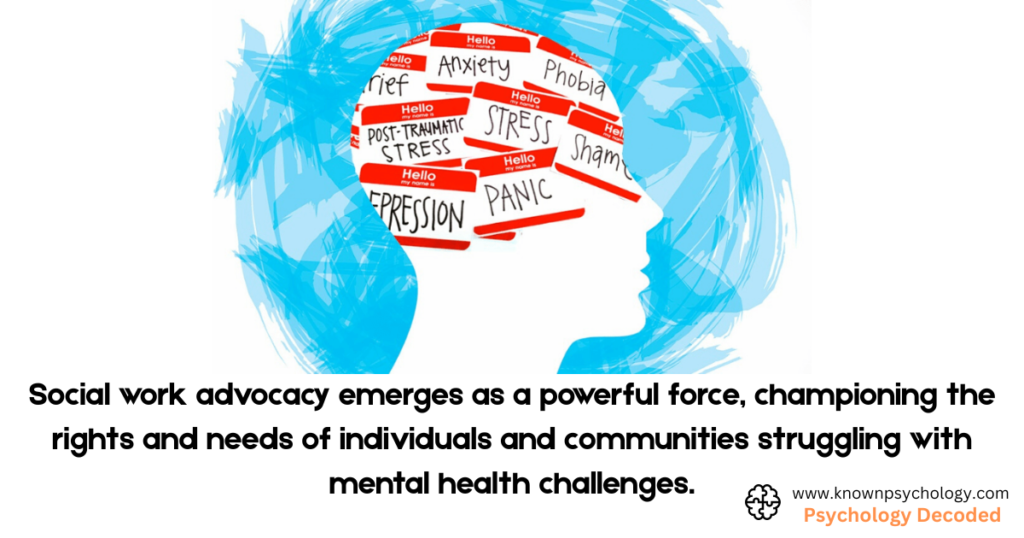
Today, over 55 million people receive mental health treatment in the United States. Some of them see psychiatrists and psychiatric nurse practitioners, while others see counselors and social workers. Counseling and social work are selfless professions meant to help people overcome their mental health struggles and their surroundings.
Social work and counseling aren’t so different, but the differences between them are quite important. That’s especially true when you consider that social workers are often assigned to their patients, whereas counseling is more elective.
While the fields are similar, the paths to becoming a social worker or a counselor are different in many ways. Follow along as we explore how counseling and social work differ, and more importantly, what the two fields share.
Academic Background
While there is some overlap, counselors and social workers have different academic paths. Naturally, both paths emphasize psychology, but counseling and social work are two different majors. As an aspiring social worker, you will learn a lot about psychology, but that’s just the tip of the iceberg.
That’s because social workers must also learn about policy, sociology, and social justice. Conversely, counselors primarily learn about psychology and human development. You can earn a bachelor’s degree in social work or counseling in four years, but many people pursue advanced degrees.
That’s especially true today, when many social workers pursue a Master of Social Work and counselors pursue a Master’s in Counseling. A Master’s in Counseling is required to practice independently, and a Master of Social Work is required to become a Licensed Clinical Social Worker (LCSW).
Patient Care
Social workers and counselors both treat their patients for psychological disorders. However, their approach differs in many ways, starting with the scope of their treatment. For example, counselors directly treat their patients and focus on traditional therapy.
This involves diagnosing mental health conditions, treating their patients, and helping them develop healthy coping strategies. Naturally, this involves a lot of introspection and prioritizes teaching patients to manage their mental health on their own time. Social workers have a psychological background, but they focus more on how their patients’ environments affect them.
In that sense, social workers have a broader scope and focus on how a patient’s family, housing, finances, and environment affect them. Social workers and counselors can help patients have breakthroughs, albeit with a different approach.
Purpose
Both social workers and counselors strive to improve their patients’ quality of life. However, social workers are driven by social justice, as they often treat people in underserved communities. They often treat people living in communities with systemic poverty, racism, crime, and addiction.
Not only do they counsel their patients, but they also provide resources to help them overcome unideal living conditions. That’s why government agencies, schools, hospitals, and clinics often assign social workers to people and families. While counselors can and should prioritize social justice, that’s not their main purpose.
Most people see counselors on their own accord because they want to address their underlying mental health problems. Counsellors empower their patients to live with their mental health conditions and manage depression and anxiety. Social workers are invaluable, but counselors typically provide more comprehensive psychological treatment.
Career Path
Both social workers and counselors have many career prospects that aren’t always obvious from the outside. For example, social workers can choose from many unique specializations, such as addiction, clinical, school, and family social work. The specialization you choose will determine your patient base and affect your approach to treating them.
For example, clinical social workers typically work at clinics and hospitals, where they treat people dealing with mental health crises, addiction, and abuse. In many cases, clinical social workers arrive at hospitals to talk to and treat victims of domestic violence. You must earn a Master of Social Work with a specific focus, such as addiction or family, to work as a specialized social worker.
Counselors have many specializations to choose from, such as clinical mental health counseling, addiction, family, and substance abuse. Like specialized social workers, counselors must earn a degree and a license and take relevant coursework in a specialization.
Two Paths with Similar Results
The stigma surrounding mental health is lessening each year, but it hasn’t been eradicated. However, social work and counseling are both fast-growing professions, according to the Bureau of Labor Statistics. You can work in either field with a bachelor’s degree, but advanced degrees can skyrocket your career potential in social work and counseling.
Social work is a great profession for people who care a lot about social justice and want to help people in underserved communities. Their duties extend beyond basic counseling, as they must deal with policy and allocate resources to struggling clients. Conversely, counselors solely focus on mental health and cognitive behavioral therapy.
However, there is some crossover, and neither profession is better or more useful than the other. The path to social work and counseling may be different, but they both positively impact millions of lives.

Maria holds an MS in Psychology with a specialization in Social Psychology. She is a research-oriented writer with a strong academic background in psychological and behavioral sciences. Her work focuses on bridging academic research and public understanding by simplifying complex psychological theories and social dynamics. She writes about the relationship between society, mental health, and human behavior, making evidence-based ideas more accessible and practical for readers.