The conscientiousness personality trait describes how much a person tends to be organized, responsible, self-disciplined, and persistent in pursuing goals. It is one of the Big Five personality traits, and it exists on a spectrum: people can show more or less conscientiousness, and their behavior can vary with the situation.
In everyday life, conscientiousness might look like planning ahead, keeping a promise, finishing a task, or decision-making style. It does not mean being perfect, constantly productive, or tidy in every area.
What does conscientiousness mean?
Conscientiousness is a broad personality trait involving self-discipline, planning, goal-directed effort, and follow-through. Psychologists use the term to describe relatively enduring tendencies, not a person’s behavior every minute or their worth as a person.
If you’re asking, “What is the conscientiousness personality trait?” a simple answer is: it describes how someone tends to handle responsibilities and work toward goals. Someone higher in conscientiousness may rely on plans and routines; someone lower in it may be more spontaneous or find consistent organization and follow-through more difficult.
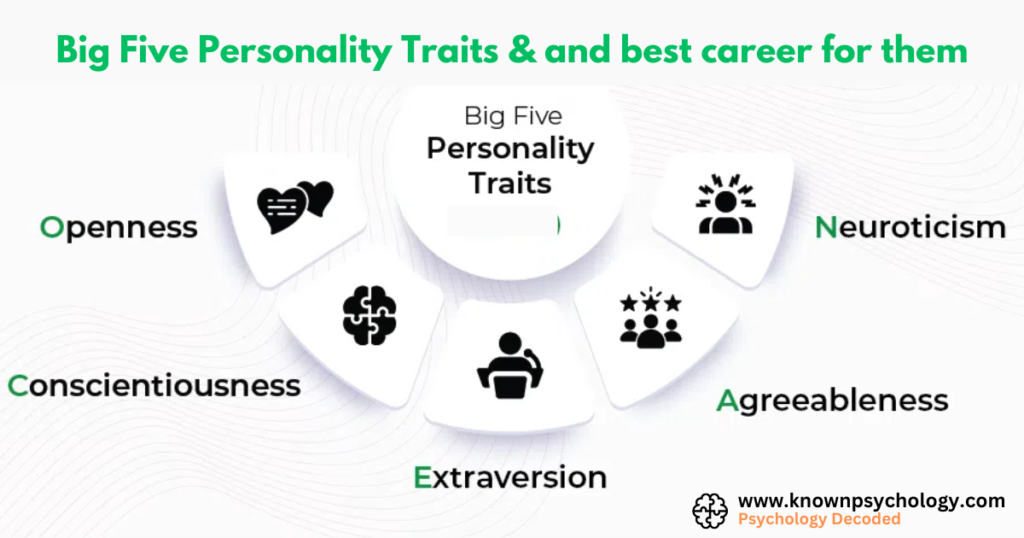
Conscientiousness is one of the five dimensions in the Big Five model, alongside openness, extraversion, agreeableness, and neuroticism. These traits describe broad patterns of personality rather than fixed types.
Free personality test can provide a broader way to explore personality.

What are the main facets?
Researchers divide conscientiousness into smaller components, often called facets. The exact grouping varies across personality models, but four commonly identified facets are self-control, industriousness, responsibility, and orderliness.
| Facet | What it describes | Everyday example |
| Self-control | Managing attention and impulses to meet a goal | Turning off notifications while finishing a task |
| Industriousness | Working steadily and persisting through difficulty | Continuing a project after the initial excitement wears off |
| Responsibility | Reliably meeting duties and obligations | Letting a teammate know early if a deadline is at risk |
| Orderliness | Keeping belongings, plans, or work organized | Using a calendar to track appointments |
These facets are related, but they are not identical. Someone can be hardworking and reliable without being especially neat, or organized without being highly ambitious. So, “define conscientiousness personality trait” should not be reduced to “likes a tidy desk.”
What are signs of high conscientiousness?
Common signs of higher conscientiousness include:
- Planning ahead and dividing large goals into smaller steps.
- Remembering deadlines, appointments, and commitments.
- Following through on tasks, including routine or boring ones.
- Checking details and taking care with work.
- Pausing to consider consequences after using a communication style perspective to reflect on how they communicate.
- Keeping useful systems for managing time, tasks, or belongings.
These are tendencies, not a pass-or-fail checklist. A person can be conscientious and still procrastinate, miss a deadline, or have a messy room. One behavior alone cannot define someone’s overall personality.
Examples in everyday life
Conscientiousness often appears in small, practical choices:
- At school: A student checks the assignment instructions, makes a study plan, and reviews their work before submitting it.
- At work, understanding your work personality can add context. An employee tracks responsibilities and follows up when a project depends on someone else’s input. An employee tracks responsibilities and follows up when a project depends on someone else’s input.
- With money: Someone sets a bill reminder or takes time to compare options before making a large purchase.
- In relationships: A person keeps plans when possible, communicates when something changes, and takes shared responsibilities seriously.
- With With self-awareness, someone builds a manageable exercise or practice routine and resumes it after missing a day. Someone builds a manageable exercise or practice routine and resumes it after missing a day.
The examples do not imply that highly conscientious people never make mistakes. The trait is about the pattern a person tends to show over time.
Is conscientiousness always a good thing?
Conscientiousness can be useful when a situation calls for planning, reliability, and sustained effort. Reviews link the trait with outcomes such as academic and job performance, and research has also examined its associations with health-related behaviors and longevity. These are group-level relationships, not promises about any individual’s future.
The same tendencies can cause friction when they become too rigid. For example, someone might struggle to adapt when plans change, spend too long perfecting a minor detail, or find it difficult to stop working. Conscientiousness is not automatically better at higher levels in every situation; context and balance matter.
Is conscientiousness the same as being Type A?
No. Type A and conscientiousness are not interchangeable labels. Conscientiousness is a Big Five trait centered on tendencies such as self-discipline, responsibility, and goal-directed behavior. Type A is a separate personality pattern commonly associated with qualities such as urgency and competitiveness.
Some people may identify with aspects of both, but being conscientious does not automatically make someone Type A.
Are people with ADHD low in conscientiousness?
Some behaviors associated with ADHD, such as difficulty organizing tasks, sustaining attention, or following through, can overlap with behaviors measured by conscientiousness questionnaires. Research has reported an association between ADHD symptoms and lower conscientiousness on average, but that does not mean every person with ADHD is low in the trait. A personality score cannot diagnose ADHD.
Personality descriptions also cannot explain every difficulty with planning or follow-through. A person’s circumstances, stress, health, environment, and access to support may affect how consistently they can manage tasks.
Are conscientious people more intelligent?
Not necessarily. Psychology of mind and behavior can help place the distinction in the broader study of human behavior. Intelligence and conscientiousness describe different things: cognitive ability concerns how someone reasons, learns, or processes information; conscientiousness concerns typical patterns such as persistence and organization.
A large meta-analysis found that relationships between personality and cognitive abilities differ across specific traits and abilities. Within conscientiousness, industriousness showed positive relationships with many abilities, while the broad trait and orderliness showed weaker or less consistent patterns. That does not mean conscientiousness causes intelligence or that a conscientious person is automatically more intelligent.
Can conscientiousness change?
Conscientiousness is relatively stable, but it is not fixed for life. Research on personality development finds that traits can shift over time, and a review of development research describes how self-regulation and environmental experiences may contribute to the development of conscientiousness.
If you want to become more consistent with a particular task, start with the behavior rather than trying to change your whole personality. For example, choose one recurring task, set a realistic time for it, and use a reminder or checklist. If the routine fails, adjust the plan to make it easier to follow.
How is conscientiousness measured?
Psychologists often measure conscientiousness with questionnaires that ask people how well different statements describe them. Some assessments also use reports from people who know the person. Because tests can emphasize different facets, a score is best treated as an estimate of tendencies, not a complete description of someone.
An online personality quiz may be useful for reflection, but it should not be treated as a diagnosis or a definitive judgment about ability or potential.
Frequently asked questions
What is a simple definition of conscientiousness?
Conscientiousness is the tendency to be responsible, self-disciplined, organized, and persistent in working toward goals. It is a broad personality trait, not a measure of someone’s character or value.
What does high conscientiousness look like?
It may look like planning, keeping commitments, finishing tasks, attending to details, and thinking through decisions. These are common patterns, not behaviors a person must show all the time.
Can someone be conscientious but messy?
Yes. Orderliness is only one facet of conscientiousness. A person may be hardworking, self-disciplined, and dependable without being particularly neat.
Does conscientiousness mean perfectionism?
No. Conscientiousness can involve care and persistence, but perfectionism is not its definition. High standards may be useful; they can become counterproductive when they make it hard to finish, adapt, or rest.
Is conscientiousness a personality type?
No. In the Big Five framework, conscientiousness is a dimension that people can show to different degrees, not a fixed category that divides people into types.
Closing thought
Personality psychology is a useful broader topic for readers exploring personality. Personality psychology offers broader context for understanding individual differences. Conscientiousness is not about doing everything perfectly. It is a useful way to describe how people tend to plan, manage responsibilities, and follow through, and understanding those tendencies can help them choose routines and strategies that fit their lives.

Maria holds an MS in Psychology with a specialization in Social Psychology. She is a research-oriented writer with a strong academic background in psychological and behavioral sciences. Her work focuses on bridging academic research and public understanding by simplifying complex psychological theories and social dynamics. She writes about the relationship between society, mental health, and human behavior, making evidence-based ideas more accessible and practical for readers.